Mastema
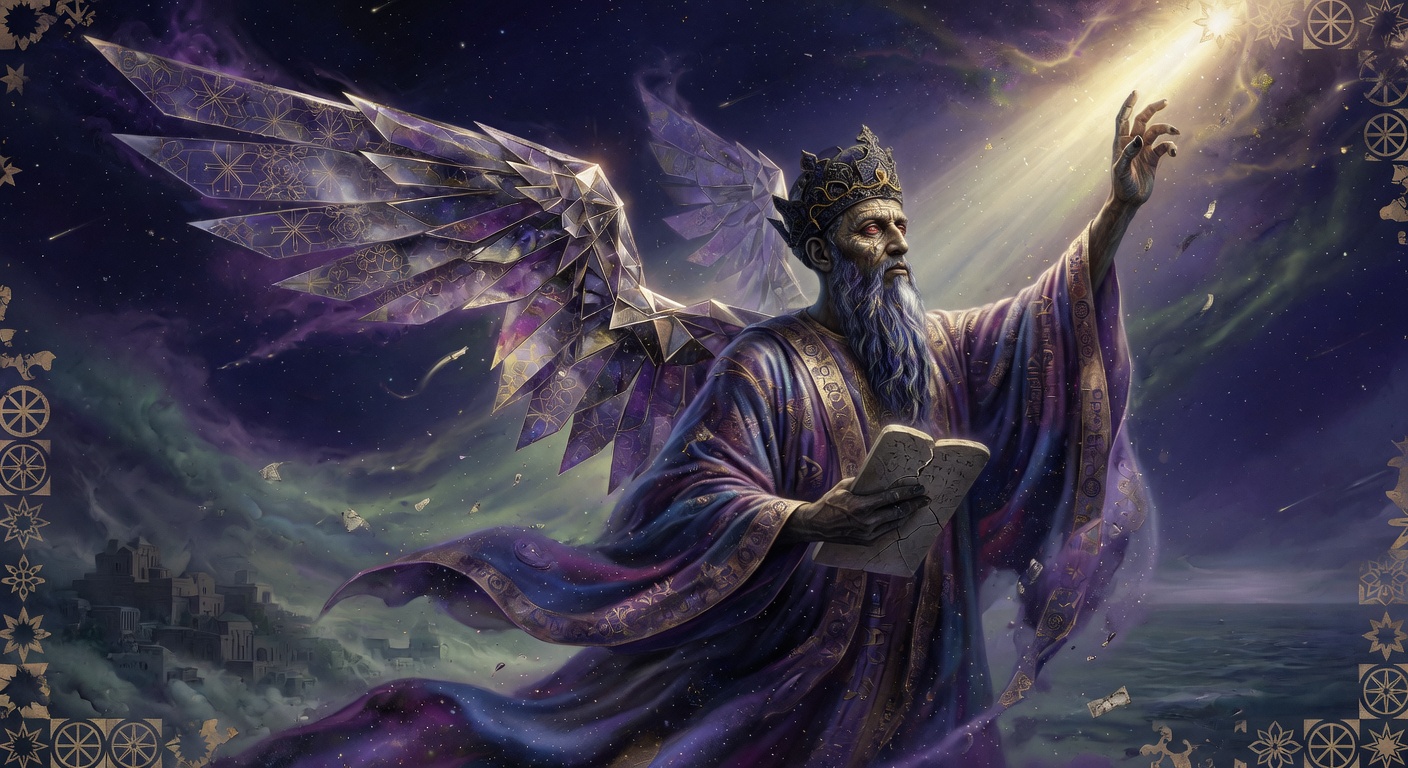
In the richly layered cosmology of Second Temple Jewish writings, a formidable adversarial figure arises to mediate between divine authority and the forces of chaos that afflict humanity. This being functions as the chief of evil spirits in the Book of Jubilees, petitioning God for permission to retain a portion of these spirits after the flood so they might continue accusing and tempting mortals. Far from an independent rebel, the figure operates within a strictly ordered cosmos where even malevolent powers must seek heavenly consent, underscoring the text’s emphasis on divine sovereignty amid ongoing spiritual conflict. The Book of Jubilees situates this activity at pivotal moments in primeval and patriarchal history. In chapter 10, the spirit requests and receives one-tenth of the evil spirits to “do all manner of wrong and sin, and all manner of transgression” among humans, establishing a structured system of affliction that echoes earlier traditions of fallen watchers found in 1 Enoch. Later, during the account of Abraham, the same figure initiates the test of the patriarch by urging the sacrifice of Isaac (Jubilees 17–18), thereby serving simultaneously as accuser and instrument of divine trial. These episodes illustrate how the spirit’s role bridges the antediluvian era of Noah with the covenantal age of the patriarchs, providing a narrative mechanism for explaining both moral testing and the persistence of evil after the flood. Within the broader Enochic and Jubilean tradition, this portrayal reflects a developing angelology in which evil is neither fully autonomous nor entirely outside God’s control. The figure’s appearances tie together motifs of spiritual warfare, covenantal fidelity, and eschatological judgment that run through 1 Enoch, Jubilees, and related texts. By dramatizing the tension between accusation and protection, the narrative invites readers to consider how ancient communities understood suffering, temptation, and divine providence as intertwined elements of sacred history.
Biography
- Occupation
- Prince of the Evil Spirits
- Era
- Antediluvian / Patriarchal
Did You Know?
Mastema is the chief of the evil spirits who receives limited permission from God to tempt humanity.
He is the one who proposes the test of Abraham with Isaac.
Key Chapters
Key Passages
Mastema and the Evil Spirits After the Flood
The Book of Jubilees 10:1
After the Flood, Mastema (the chief of the spirits) asks God for a tenth of the evil spirits to remain with him to tempt and lead astray the children of men; God grants his request but limits their power.
 1nd in the third week of this jubilee the unclean demons began to lead astray the children of palms, and (the extent of one wall slaying his sons' sons. And he prayed before the Lord his God, and said: 'God of the spirits of all flesh, who hast shown mercy unto me And hast saved me and my sons from the waters of the flood, And hast not caused me to perish as Thou didst the sons of perdition; For Thy grace has been great towards me, And great has been Thy mercy to my soul; Let Thy grace be lift up upon my sons, And let not wicked spirits rule over them Lest they should destroy them from the earth.
Mastema Tests Abraham
The Book of Jubilees 17:1
Mastema comes before God and accuses Abraham of loving Isaac more than God; God permits the test of the binding of Isaac to prove Abraham's faithfulness.
1nd in the first year of the fifth week Isaac was weaned in this jubilee, and Abraham made a great banquet in the third month, on the day his son Isaac was weaned. And Ishmael, the son of Hagar, the Egyptian, was before the face of Abraham, his father, in his place, and Abraham rejoiced and blessed God because he had seen his sons and had not died childless. And he remembered the words which He had spoken to him on the day on which Lot had parted from him, and he rejoiced because the Lord had given him seed upon the earth to inherit the earth, and he blessed with all his mouth the Creator of all things. And Sarah saw Ishmael playing and dancing, and Abraham rejoicing with great joy, and she became jealous of Ishmael and said to Abraham, 'Cast out this bondwoman and her son; for the son of this bondwoman will not be heir with my son, Isaac.' And the thing was grievous in Abraham's sight, because of his maidservant and because of his son, that he should drive them from him. And God said to Abraham 'Let it not be grievous in thy sight, because of the child and because of the bondwoman; in all that Sarah hath said unto thee, harken to her words and do (them); for in Isaac shall thy name and seed be called. But as for the son of this bondwoman I will make him a great nation, because he is of thy seed.' And Abraham rose up early in the morning, and took bread and a bottle of water, and placed them on the shoulders of Hagar and the child, and sent her away. And she departed and wandered in the wilderness of Beersheba, and the water in the bottle was spent, and the child thirsted, and was not able to go on, and fell down. And his mother took him and cast him under an olive tree, and went and sat her down over against him, at the distance of a bow-shot; for she said, 'Let me not see the death of my child,' and as she sat she wept. And an angel of God, one of the holy ones, said unto her, 'Why weepest thou, Hagar Arise take the child, and hold him in thine hand; for God hath heard thy voice, and hath seen the child.' And she opened her eyes, and she saw a well of water, and she went and filled her bottle with water, and she gave her child to drink, and she arose and went towards the wilderness of Paran. And the child grew and became an archer, and God was with him, and his mother took him a wife from among the daughters of Egypt. And she bare him a son, and he called his name Nebaioth; for she said, 'The Lord was nigh to me when I called upon him.' And it came to pass in the seventh week, in the first year thereof, in the first month in this jubilee, on the twelfth of this month, there were voices in heaven regarding Abraham, that he was faithful in all that He told him, and that he loved the Lord, and that in every affliction he was faithful. And the prince Mastema came and said before God, 'Behold, Abraham loves Isaac his son, and he delights in him above all things else; bid him offer him as a burnt-offering on the altar, and Thou wilt see if he will do this command, and Thou wilt know if he is faithful in everything wherein Thou dost try him.
Mastema and the Plagues in Egypt (implied)
The Book of Jubilees 48:1
In Jubilees, Mastema is active in opposing Moses and Israel; he helps the Egyptian magicians and is ultimately bound during the exodus.
1nd in the sixth year of the third week of the forty-ninth jubilee thou didst depart and dwell (in the land of Midian, five weeks and one year. And thou didst return into Egypt in the second week in the second year in the fiftieth jubilee. And thou thyself knowest what He spake unto thee on Mount Sinai, and what prince Mastema desired to do with thee when thou wast returning into Egypt 3 . Did he not with all his power seek to slay thee and deliver the Egyptians out of thy hand when he saw that thou wast sent to execute judgment and vengeance on the Egyptians And I delivered thee out of his hand, and thou didst perform the signs and wonders which thou wast sent to perform in Egypt against Pharaoh, and against all his house, and against his servants and his people. And the Lord executed a great vengeance on them for Israel's sake, and smote them through (the plagues of) blood and frogs, lice and dog-flies, and malignant boils breaking forth in blains; and their cattle by death; and by hail-stones, thereby He destroyed everything that grew for them; and by locusts which devoured the residue which had been left by the hail, and by darkness; and (by the death) of the first-born of men and animals, and on all their idols the Lord took vengeance and burned them with fire And everything was sent through thy hand, that thou shouldst declare (these things) before they were done, and thou didst speak with the king of Egypt before all his servants and before his people