Divine Judgment and the Flood
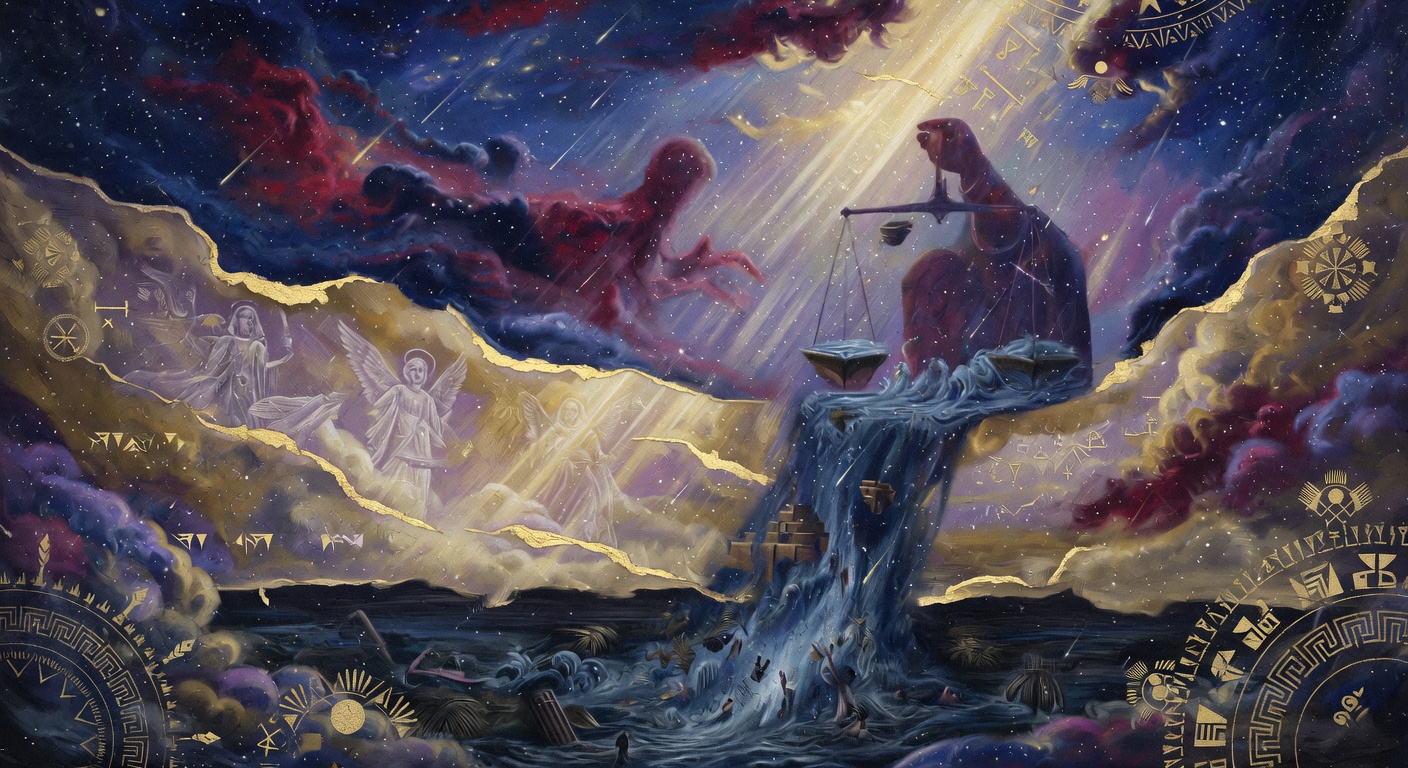
In the ancient apocryphal traditions, the great deluge emerges as the decisive act of divine intervention against a world overrun by corruption that originated in heaven itself. The Watchers, a group of angels who descended to Mount Hermon, not only revealed forbidden arts such as weapon-making and cosmetics but also entered unions with human women, producing the violent and insatiable giants described in 1 Enoch 6–7. This transgression shattered the boundaries between the divine and human realms, filling the earth with blood and lawlessness that cried out for judgment. The Flood therefore functions less as a simple punishment for human sin and more as the necessary cleansing of a cosmos polluted by angelic rebellion. The Book of Enoch situates this judgment within a tightly structured heavenly decree. In chapters 10–11 the archangels receive explicit commands to bind the Watchers, destroy the giants, and spare only Noah, who is instructed to hide himself and preserve seed for a renewed creation. Later passages in chapters 65–67 and 106–107 expand the scene, portraying Noah’s righteous stand against the giants and the angels’ futile pleas for mercy. These narratives present the Flood as the moment when divine order is forcibly restored after the cosmic boundaries have been violated. The Book of Jubilees and the Book of Jasher develop the same sequence with additional chronological precision. Jubilees 5 recounts how the giants turned against one another and humanity before the waters were released in the 600th year of Noah’s life, while Jasher 4–5 supplies extended dialogue underscoring Noah’s repeated warnings and the people’s refusal to repent. Across these texts Noah stands as the single righteous remnant whose preservation guarantees both the continuation of the human line and the renewal of the covenantal relationship with God. Within the broader Enochian tradition this episode carries lasting theological weight. It demonstrates that divine justice operates on multiple levels—angelic, human, and cosmic—while establishing Noah as the model of fidelity amid universal collapse. The Flood thus becomes the archetype for all subsequent judgments, linking the primordial rebellion of the Watchers to the moral choices of later generations.
Details
- Category
- Eschatological
Key Chapters
Key Passages
Judgment Pronounced
The Book of Enoch 10:1-15
 1nd cleanse thou the earth from all oppression, and from all unrighteousness, and from all sin, and from all godlessness: and all the uncleanness that is wrought upon the earth destroy from off the earth.
Did You Know?
The Flood is the first great judgment; the final one is still future in Enoch.
Both are carried out by divine agents (angels / Son of Man).