Dreams & Visions
25 times God spoke through dreams and visions - revealing the future, delivering warnings, and changing the course of history.


Apocalyptic
-
Enoch's Heavenly Visions
Dreamer:
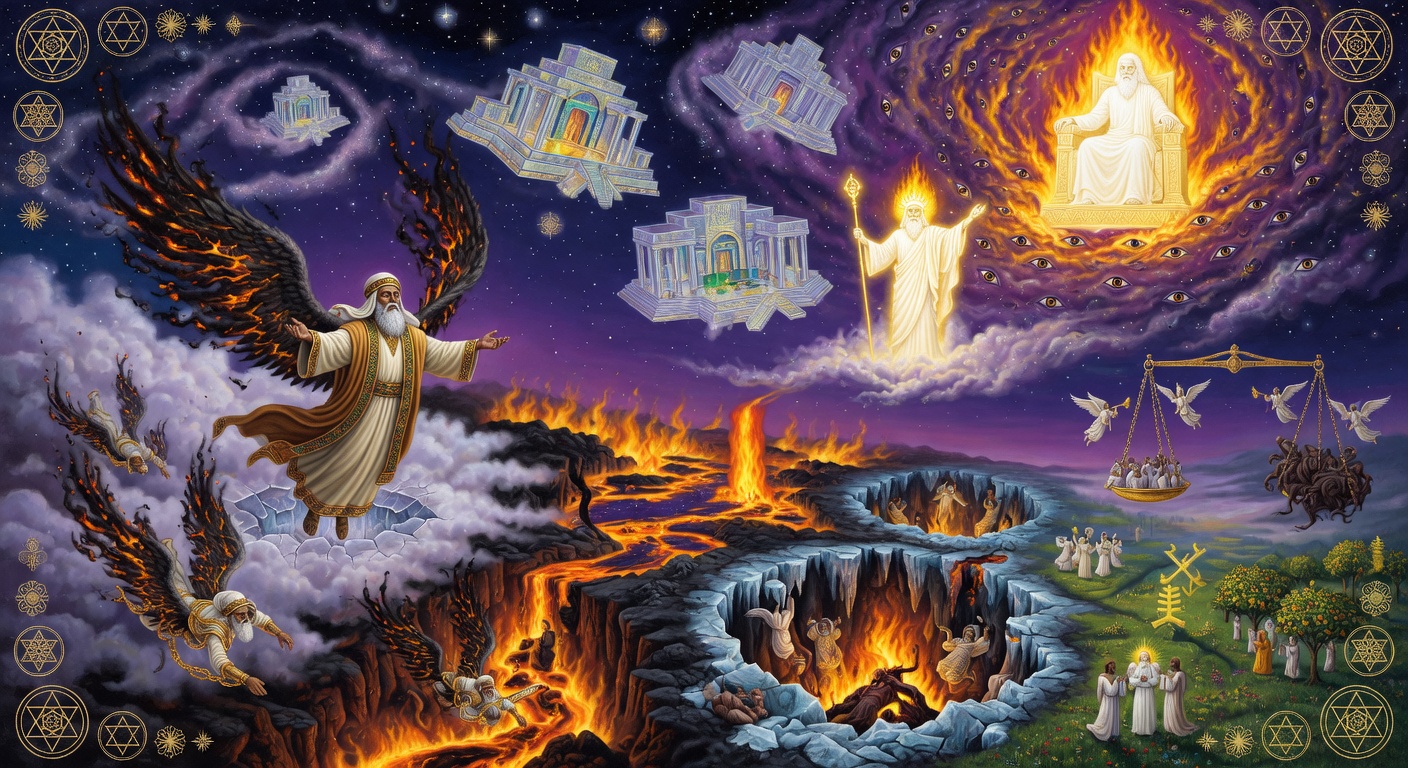
Among the ancient Jewish apocalyptic writings attributed to the patriarch Enoch, the accounts of his visionary experiences stand as some of the most profound explorations of divine realms and eschatological mysteries preserved from the Second Temple period. These narratives, woven primarily through the Book of Watchers and the Similitudes, portray Enoch as a seer granted access to heavenly secrets that illuminate the origins of evil and the structure of cosmic judgment. Drawing from traditions that likely circulated between the third and first centuries BCE, the visions emphasize Enoch's role as an intermediary who witnesses events inaccessible to ordinary humanity, thereby establishing a framework for understanding divine justice that influenced later apocalyptic literature. Central to these accounts are the detailed depictions of the Watchers' rebellion and its consequences, as recounted in chapters 6 through 16 of 1 Enoch. Enoch is transported through layered heavens, where he beholds the throne of glory surrounded by fiery attendants and streams of flame, an image that underscores the inaccessibility and majesty of the divine presence. His journeys extend to remote regions of the earth and underworld, revealing the places prepared for the punishment of fallen angels and the reward of the righteous, themes that recur across chapters 17 to 36. These travels serve not merely as spectacle but as revelations that connect primordial transgressions to ongoing human suffering, grounding moral order in observable cosmic realities. The visions reach their theological climax in portrayals of the Son of Man, particularly within the Similitudes, where this figure appears as a preexistent agent of judgment seated beside the Ancient of Days. Enoch himself is at times identified with this exalted being, highlighting the fluid boundaries between human and divine in these traditions. Scenes of final judgment, including the weighing of souls and the separation of the wicked into places of torment, provide a comprehensive eschatological vision that integrates personal accountability with universal renewal. Within the broader Enochian corpus, these heavenly experiences function as the interpretive core, offering readers a lens through which to view history as a drama unfolding under divine oversight and inviting contemplation of humanity's place within an ordered yet contested cosmos.
-
Enoch's Vision Concerning Noah
Dreamer:
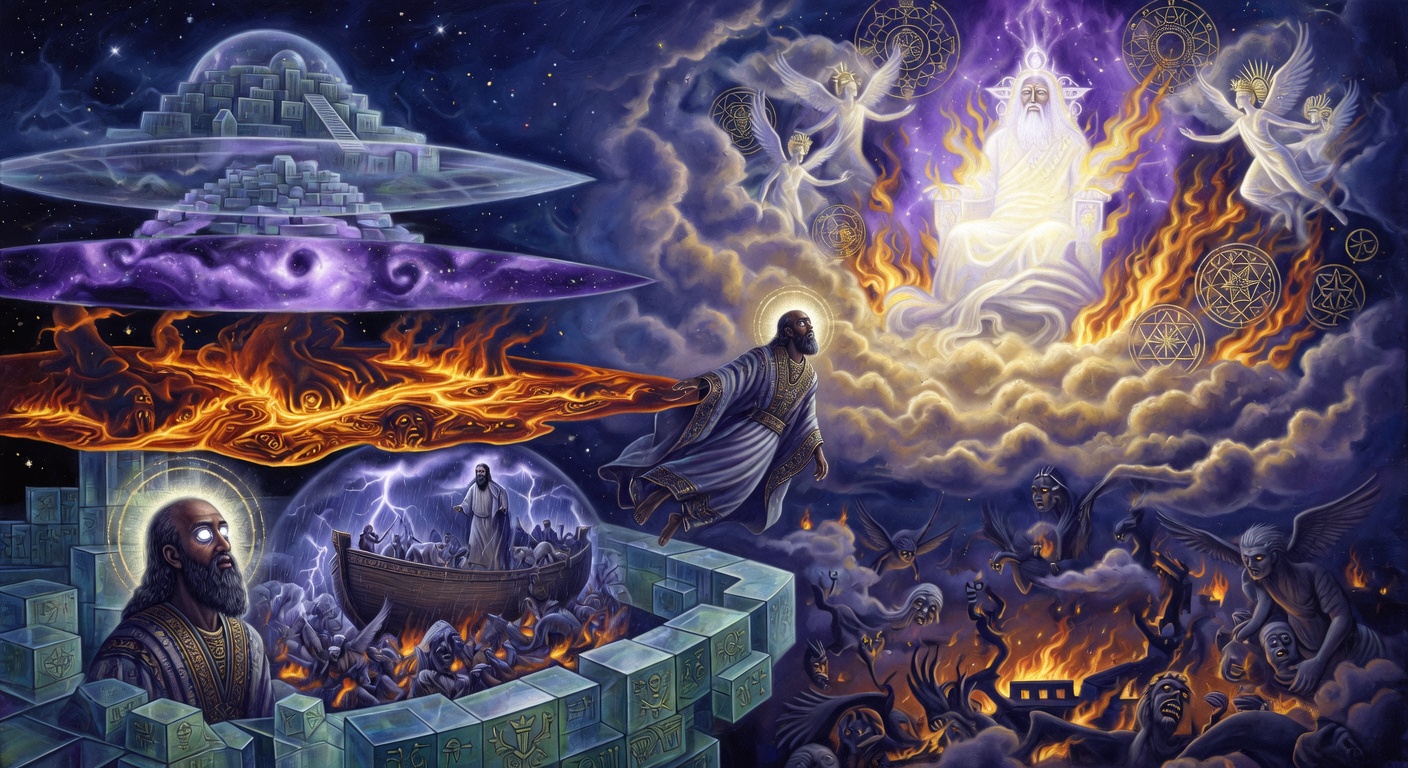
Within the prophetic revelations attributed to the antediluvian patriarch Enoch lies a striking vision of divine judgment and preservation that links the corruption of the pre-Flood world directly to the survival of Noah. This account appears in the Book of Enoch at chapters 65 through 67, where Enoch is transported in spirit to witness the secrets of heaven and earth. There he beholds the earth convulsed by the consequences of angelic transgression, with waters bursting forth to cleanse the violence that has overwhelmed creation. The vision positions Enoch not merely as an observer but as a mediator who receives instruction concerning the one righteous man who will be spared. The content of the vision centers on the causal chain established earlier in the Book of Watchers. Chapters 6 through 16 detail how the Watchers descended, taught forbidden knowledge, and produced the giants whose rapacity filled the earth with blood. Enoch’s later revelation makes explicit that this same pollution will trigger the Flood, yet Noah alone is marked for deliverance through an ark constructed under divine guidance. The text underscores that Noah’s preservation is not arbitrary but flows from his rejection of the corrupted order introduced by the fallen angels, thereby restoring a measure of order after the giants’ era of destruction. This episode holds particular weight within the broader Enochian tradition because it demonstrates the consistency of heavenly justice across generations. By revealing Noah’s future salvation to Enoch long before the event, the narrative affirms that the patriarch’s intercession and testimony continue to operate even after his translation. Similar motifs appear in the Book of Jubilees, where Enoch’s writings are said to preserve knowledge for Noah’s descendants, reinforcing the idea that revelation itself functions as an ark of memory amid catastrophe. Readers encounter here a theology in which cosmic upheaval serves both punishment and renewal.
Patriarchal
-
Jacob's Ladder Dream at Bethel
Dreamer:
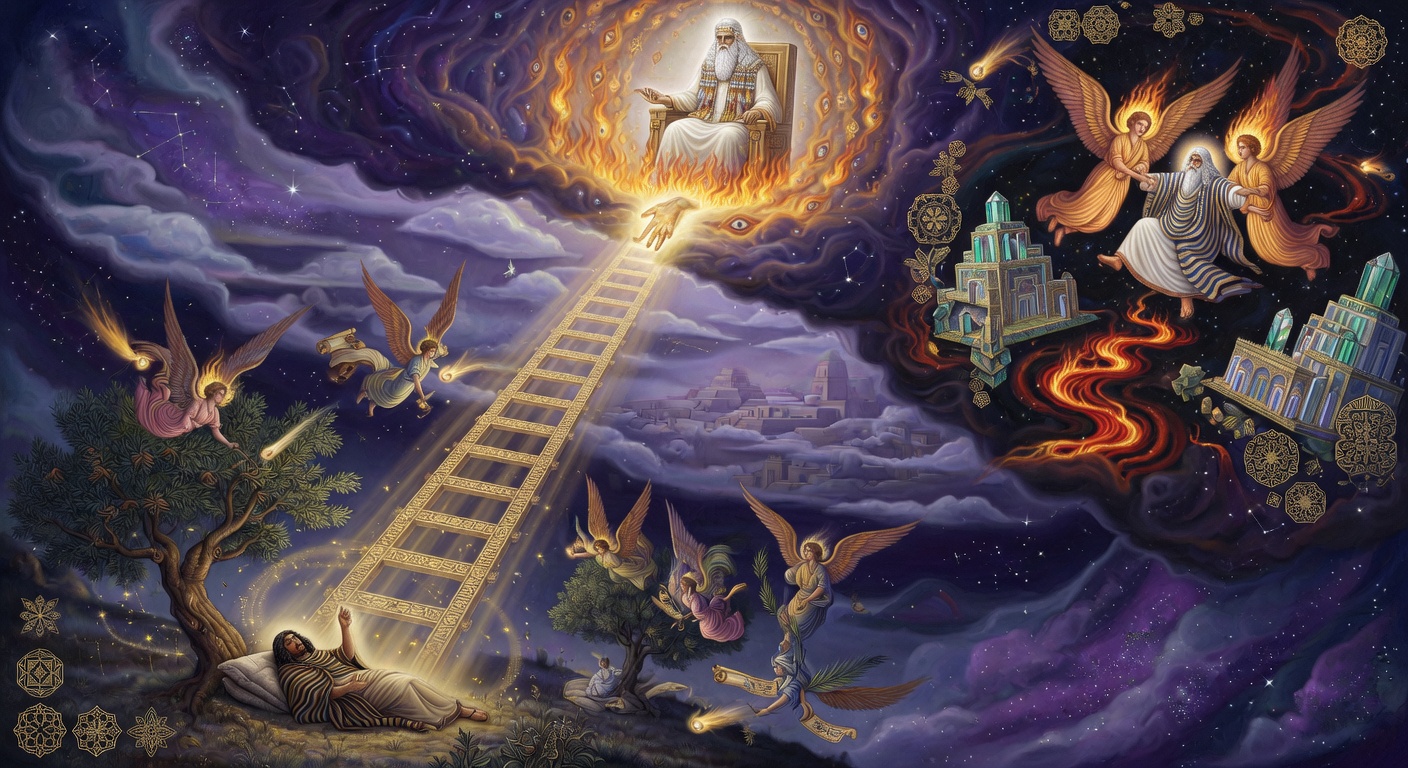
In the ancient narratives of the patriarchs, moments of divine encounter often bridge the earthly and celestial realms, revealing promises that echo through generations. Jacob's vision at Bethel stands as one such pivotal revelation, where a solitary figure receives personal confirmation of a covenant first granted to his forebears. This episode, elaborated in texts like the Book of Jubilees, underscores themes of angelic mediation and the renewal of sacred bonds amid human wanderings and trials. The Book of Jubilees recounts the dream in chapter 27, depicting Jacob resting at the site he would name Bethel, or the House of God. There he beholds a ladder stretching from earth to heaven, with angels moving along its length, while the Lord stands above and affirms the land's inheritance, numerous descendants, and protective presence. This retelling expands the Genesis account by emphasizing Jacob's subsequent vow and the site's enduring sanctity, framing the vision as a direct transmission of Abrahamic promises tailored to his lineage. The Book of Jasher similarly preserves details of this nocturnal experience, highlighting the dream's role in guiding Jacob's path through familial conflicts and exile. Within the broader Enochian tradition, such ascents and descents resonate with Enoch's own heavenly journeys detailed in 1 Enoch, particularly chapters 14 and 17-36, where portals to divine realms open and watchers traverse between worlds. Jacob's ladder thus mirrors these motifs of structured heavenly access, suggesting a shared cosmology where angels facilitate covenantal continuity and divine oversight. This connection enriches the vision's significance, portraying Bethel not merely as a personal milestone but as an echo of primordial revelations granted to earlier seers like Enoch. The episode ultimately affirms the covenant's vitality across generations, transforming a moment of vulnerability into assurance of blessing and return. By integrating angelic activity with explicit promises of land and progeny, these texts invite readers to see the dream as a foundational link in the chain of sacred history preserved in apocryphal literature.
-
Joseph's Dreams of Sheaves and Stars
Dreamer:
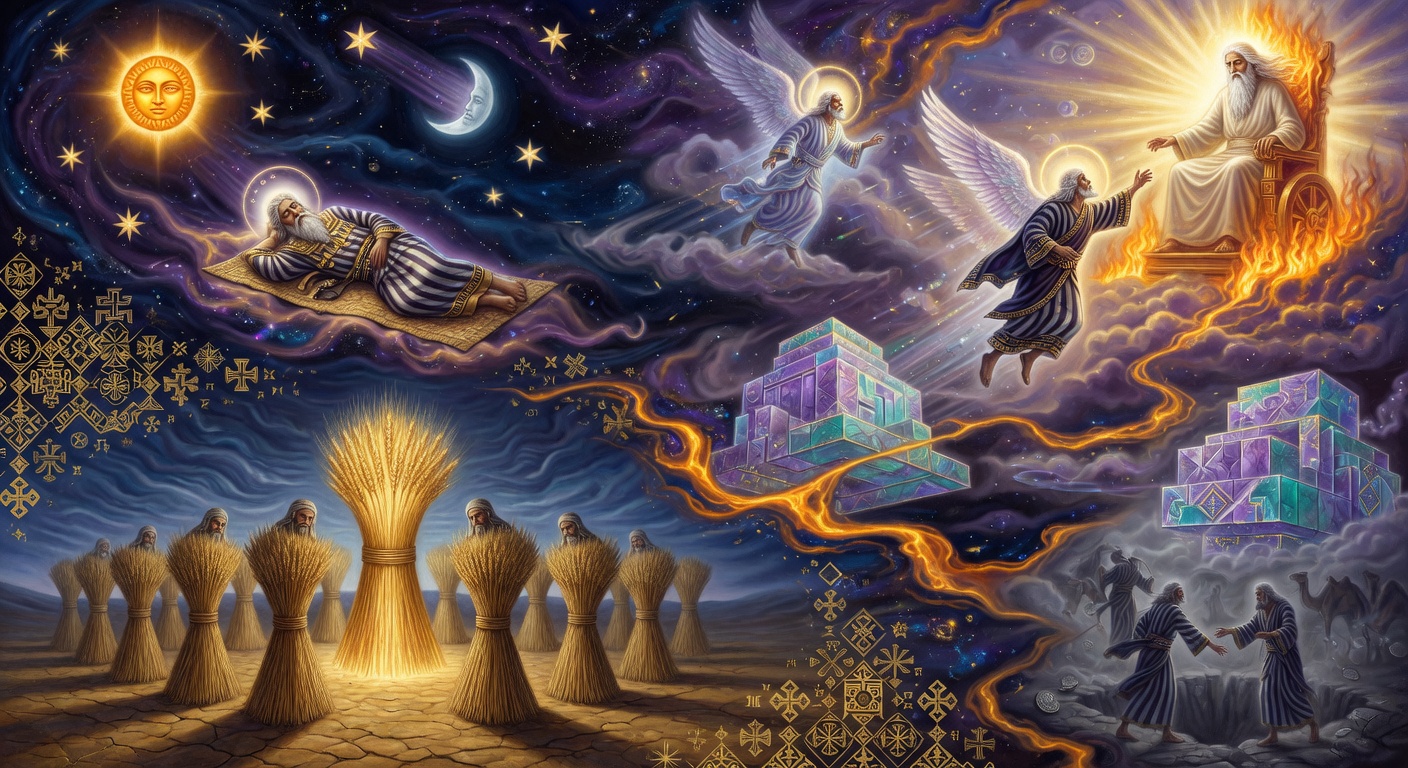
Among the patriarchal narratives expanded within the pseudepigraphal corpus, the dreams attributed to Joseph stand out as pivotal moments of divine communication that echo the symbolic and astronomical visions found throughout the Enochic literature. Texts such as the Book of Jubilees, which frequently draws upon the authority of Enoch’s revelations, situate these dreams within a broader framework of heavenly order and predestined hierarchy. Jubilees 39 preserves an account of Joseph’s early life in which his brothers’ hostility is provoked not merely by favoritism but by the prophetic content of his nocturnal experiences, underscoring how such visions participate in the same celestial mechanics that Enoch himself observes in the heavenly tablets. The first dream, in which the brothers’ sheaves bow down before Joseph’s sheaf, is elaborated in the Book of Jasher with added detail concerning the agricultural setting and the brothers’ immediate recognition of its implications for future authority. The second vision intensifies the symbolism: the sun, moon, and eleven stars prostrate themselves before him, a scene that directly parallels the astronomical portions of 1 Enoch where celestial bodies are personified as governing angels or patriarchs. These images are not random but reflect the Enochic concern with cosmic hierarchy, wherein earthly events mirror heavenly realities recorded on the tablets of destiny. Within this tradition the dreams function as catalysts for both suffering and exaltation. The jealousy they arouse leads directly to Joseph’s sale into Egypt, an event Jubilees presents as part of a providential plan already inscribed in the heavenly record. Yet the same visions anticipate Joseph’s later elevation, demonstrating the Enochic principle that true revelation, however misunderstood at first, ultimately aligns human history with divine order. Readers of these apocryphal expansions thus encounter Joseph’s experiences as a continuation of the visionary legacy initiated by Enoch himself.
-
Levi's Dream of Priesthood
Dreamer:
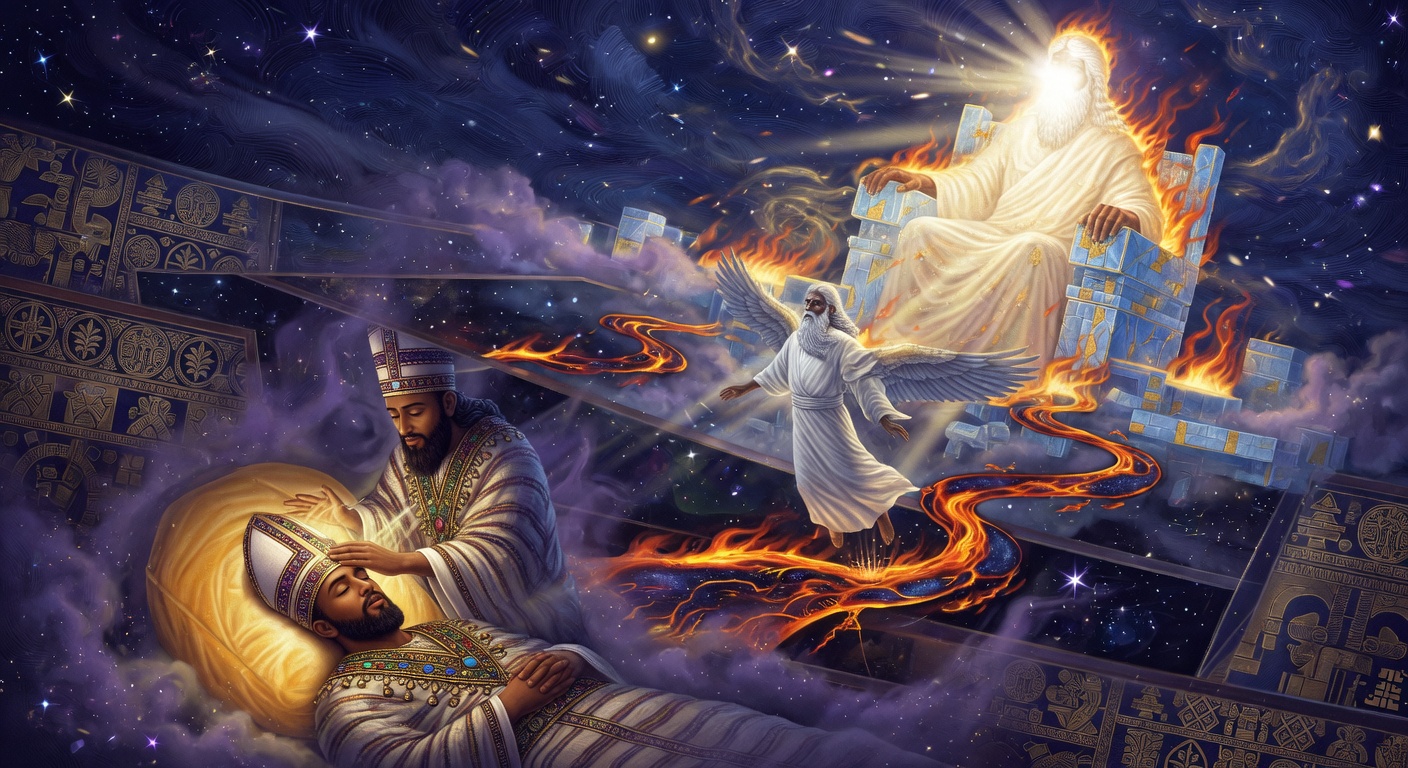
In the Book of Jubilees, the account of Levi’s visionary experience emerges at a pivotal moment in the patriarchal narrative, following the events at Shechem and during the family’s return to Bethel. Chapter 32 presents Levi’s dream as a divine commissioning that elevates the third son of Jacob above his brothers, establishing the hereditary priesthood that will later serve at the sanctuary. Seven angelic figures clothed in white garments appear to him, anoint his hands with holy oil, and invest him with the vestments of office, thereby transferring heavenly authority to an earthly line. This scene is immediately followed by Jacob’s own ritual actions, in which he arrays Levi in priestly robes and offers sacrifice on his behalf, sealing the earthly counterpart to the heavenly ordination. The vision’s imagery draws on the same celestial temple traditions found throughout the Enochic corpus, where angels perform perpetual priestly service before the throne of the Most High. By placing Levi’s commissioning within this framework, Jubilees presents the Levitical priesthood not merely as a tribal privilege but as a continuation of the angelic liturgy revealed to Enoch centuries earlier. The sevenfold investiture echoes the structured hierarchies of heaven described in the Book of the Watchers, underscoring that Israel’s cultic order mirrors and participates in the worship already established above. Within the wider collection of texts that includes Jubilees, 1 Enoch, and the Book of Jasher, this episode functions as a theological bridge between antediluvian revelation and the later Mosaic legislation. It affirms that the priesthood originates in divine initiative rather than human ambition, a claim reinforced by the insistence that Levi’s descendants alone may approach the altar. Readers encountering these traditions thus see the Levitical service as part of an unbroken chain of heavenly instruction that begins with Enoch and continues through the patriarchs.