Covenants
8 covenants God made with humanity - unbreakable promises sealed in blood that shape all of history.


-
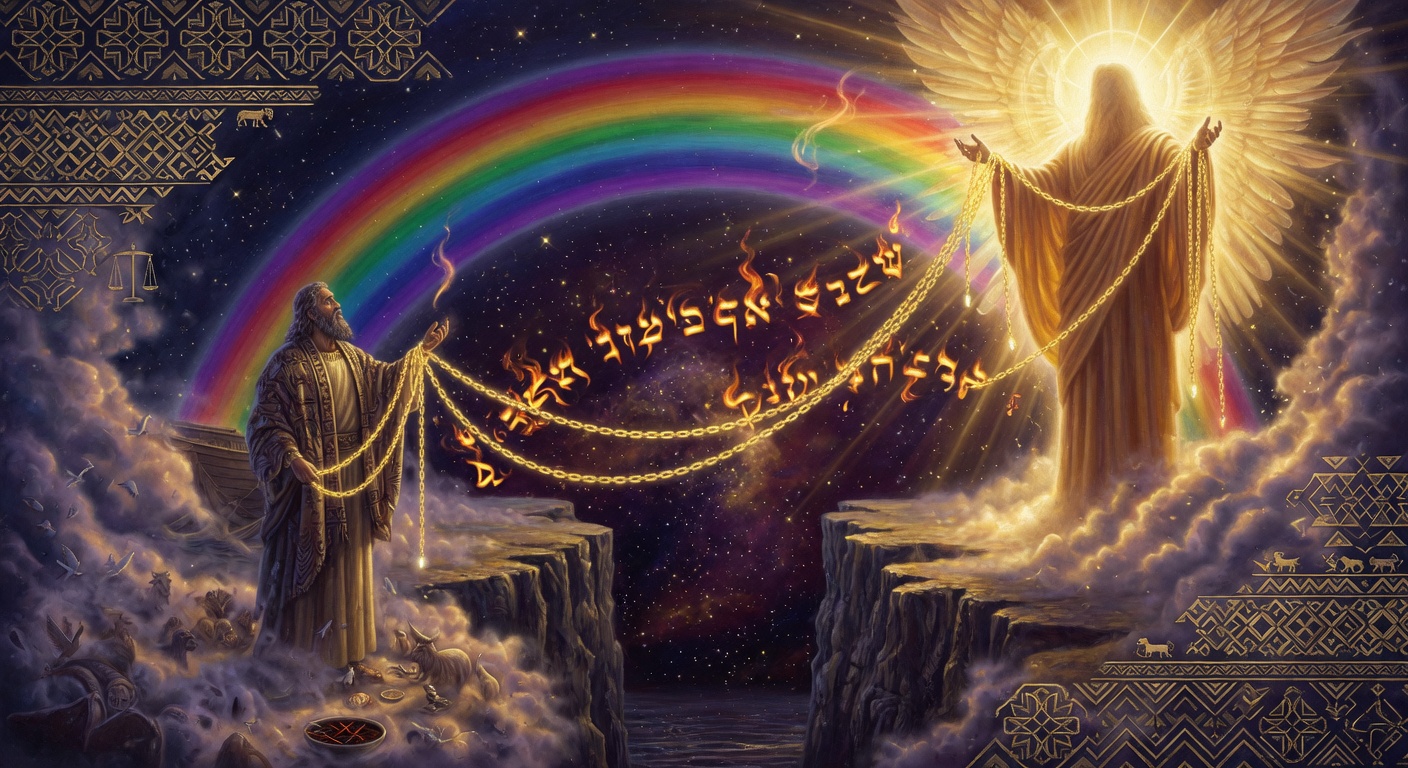
Noahic Covenant
Following the catastrophic deluge that cleansed the earth of the violence and corruption sown by the Watchers, the surviving patriarch Noah receives a divine assurance that reshapes the relationship between heaven and all living creatures. This covenant, recorded most fully in the Book of Jubilees, emerges directly from the Enochic narrative of angelic transgression and its consequences. In Jubilees 6, Noah offers burnt offerings on the renewed altar, prompting God to bind himself by oath never again to destroy the earth by flood, an oath sealed visibly by the rainbow set in the clouds as an eternal sign visible to every generation. The passage underscores that this promise extends not only to humanity but to “all flesh that is on the earth,” establishing a universal order restored after the chaos of the giants and their illicit teachings. The same chapter in Jubilees elaborates the stipulations attached to this covenant, forbidding the consumption of blood because “the blood is the life” and requiring that any shed blood—whether of beast or human—be accounted for through justice. These commands echo the earlier warnings preserved in 1 Enoch 65–67 and 106–107, where Noah is singled out as the righteous remnant spared to perpetuate a purified lineage. The Book of Jasher complements this account by describing Noah’s post-flood ordinances and the solemn renewal of laws governing bloodshed, reinforcing the idea that the covenant reestablishes moral boundaries fractured by the Watchers’ influence. Within the broader Enochic tradition, the Noahic covenant therefore functions as the pivot between antediluvian revelation and the renewed world, guaranteeing cosmic stability while demanding human accountability for life itself. Scholars note that the oath sworn at this moment is presented as eternally binding, observed in heaven and on earth alike, and renewed annually at the Festival of Weeks according to Jubilees 6:17–19. This framework highlights the covenant’s dual character: a divine pledge of restraint paired with enduring ethical imperatives. For readers of the apocryphal corpus, the episode illustrates how the flood judgment ultimately yields not mere survival but a structured peace, symbolized by the rainbow and guarded by laws that prevent the recurrence of the very sins that once provoked heavenly intervention.
Parties: God and Noah/all living creatures
-
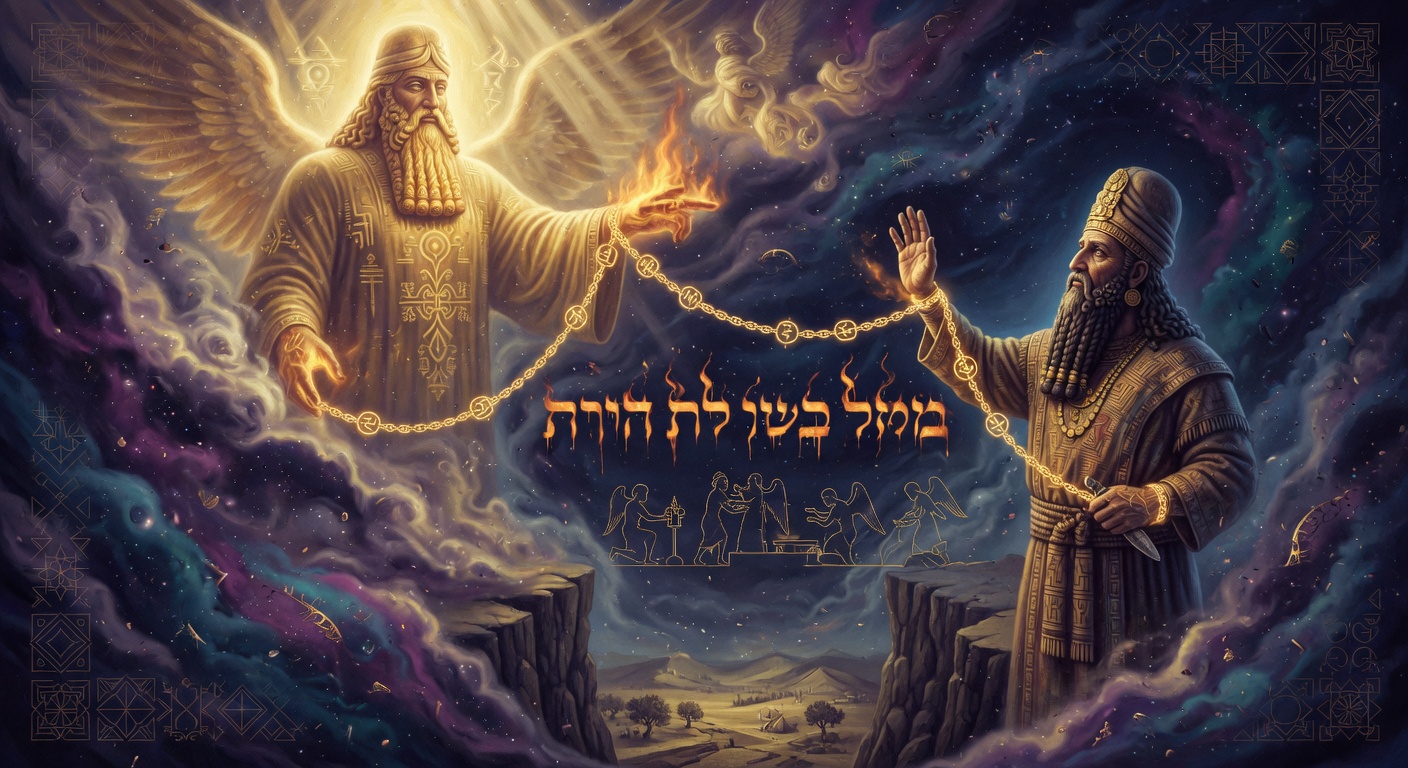
Abrahamic Covenant
In the patriarchal narratives preserved within the ancient pseudepigraphal traditions, the divine assurances extended to Abraham establish a foundational bond centered on the multiplication of his seed, possession of the land of Canaan, and the extension of blessing to all nations through his lineage. The Book of Jubilees elaborates these commitments across chapters 12 through 15, portraying them not merely as isolated promises but as elements woven into a broader divine order that aligns with the calendrical and ethical frameworks revealed to earlier figures. This presentation situates Abraham's role as a renewal of the righteous path disrupted by the Watchers, linking his obedience to the cosmic patterns first disclosed in Enochic visions of judgment and restoration. Central to this arrangement in Jubilees 15 is the command for circumcision, enacted on the eighteenth day of the fifth month when Abraham, Ishmael, and the males of his household submit to the sign that marks perpetual fidelity. The text specifies that this token applies across generations, with failure to observe it resulting in exclusion from the covenantal community, thereby emphasizing both the conditional and enduring qualities of the relationship. Such details underscore how the agreement functions as a safeguard against the moral corruption detailed in earlier Enochic accounts, preserving a distinct lineage amid surrounding nations. These assurances receive explicit reaffirmation with Isaac and Jacob, as Jubilees 17 and 27 recount the renewal of the land and progeny promises during periods of famine and sojourn, while the Book of Jasher chapters 16 and 22 depict similar divine encounters that stress continuity through trials and familial succession. The narratives highlight Jacob's receipt of the blessing at Bethel, extending the scope to twelve tribes destined to fill the earth. Within the Enochian tradition, these patriarchal developments echo the eschatological hopes of 1 Enoch, where the survival and ultimate vindication of the righteous seed counterbalance the primordial rebellions, framing Abraham's covenant as a pivotal chapter in the ongoing divine plan for cosmic renewal.
Parties: God and Abraham/his seed
-
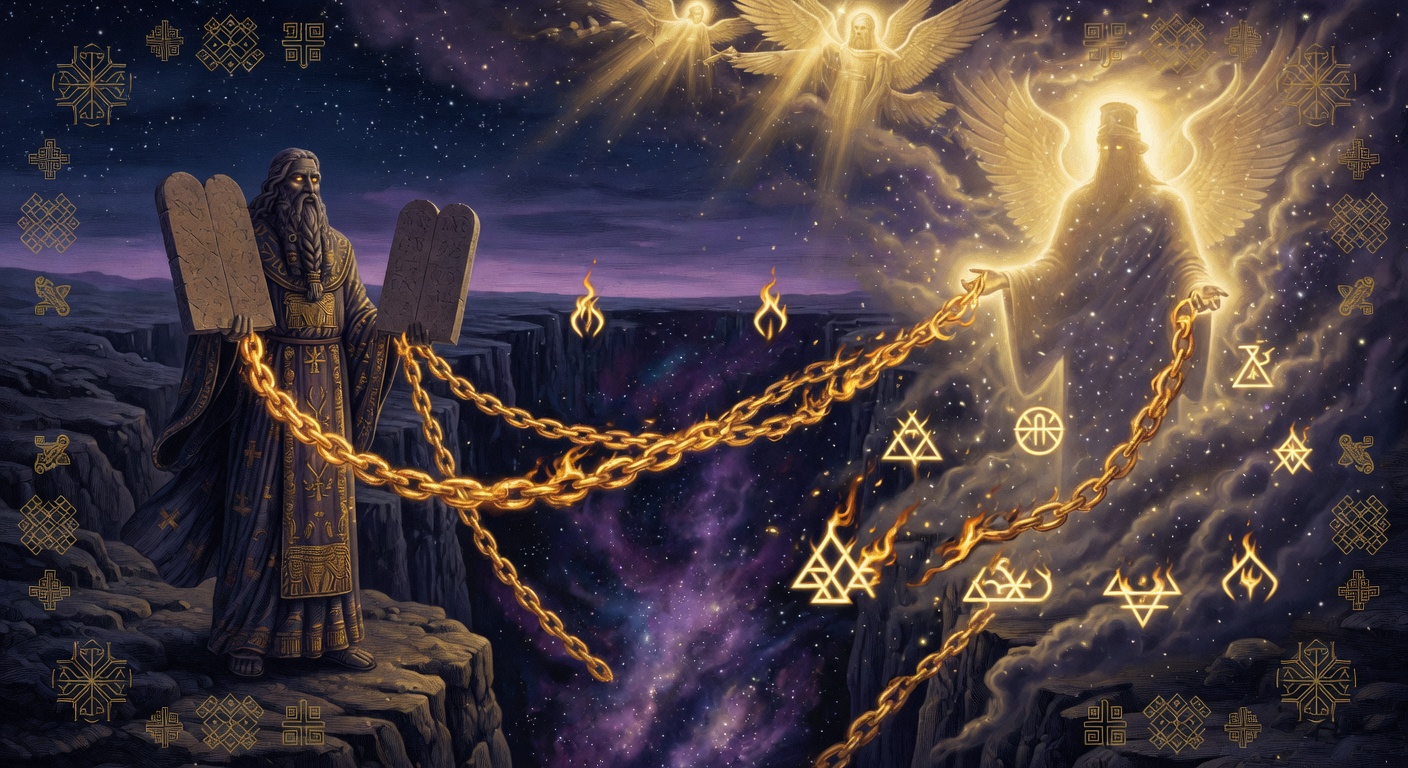
Sinai / Mosaic Covenant
In the rich narrative traditions of these ancient texts, the encounter between the divine and the people of Israel at the holy mountain marks a profound renewal of earlier covenants with figures like Noah and Abraham. This event establishes Israel as a consecrated nation bound to observe divine ordinances that govern both ethical conduct and the rhythms of sacred time. Drawing from the Book of Jubilees, the account opens with Moses ascending the mountain to receive instructions that must be inscribed on tablets of testimony, ensuring that future generations remember their obligations amid the cycles of history and judgment. Central to this framework is the emphasis on a solar calendar and the appointed feasts, presented as immutable laws inscribed from creation itself. Jubilees details how these observances, including the festivals of weeks and booths, serve to align human worship with heavenly patterns, preventing the errors of lunar reckonings that lead to corruption. The text portrays the covenant not merely as a legal code but as a living testimony, with blessings for fidelity and warnings of exile for neglect, echoing the eternal heavenly tablets shown to Enoch in earlier visions. The Book of Jasher complements this by recounting the dramatic theophany, where thunder, fire, and the sounding of trumpets accompany the giving of the law, underscoring the awe and separation required of the people. Within the broader Enochian tradition, this covenant extends the primordial revelations granted to the Watchers and patriarchs, positioning the Sinai event as a restoration of cosmic order disrupted by sin. It invites readers to see the law as a bridge between heaven and earth, preserved for those who seek to walk in the paths of righteousness outlined across these interconnected writings.
Parties: God and Israel
-
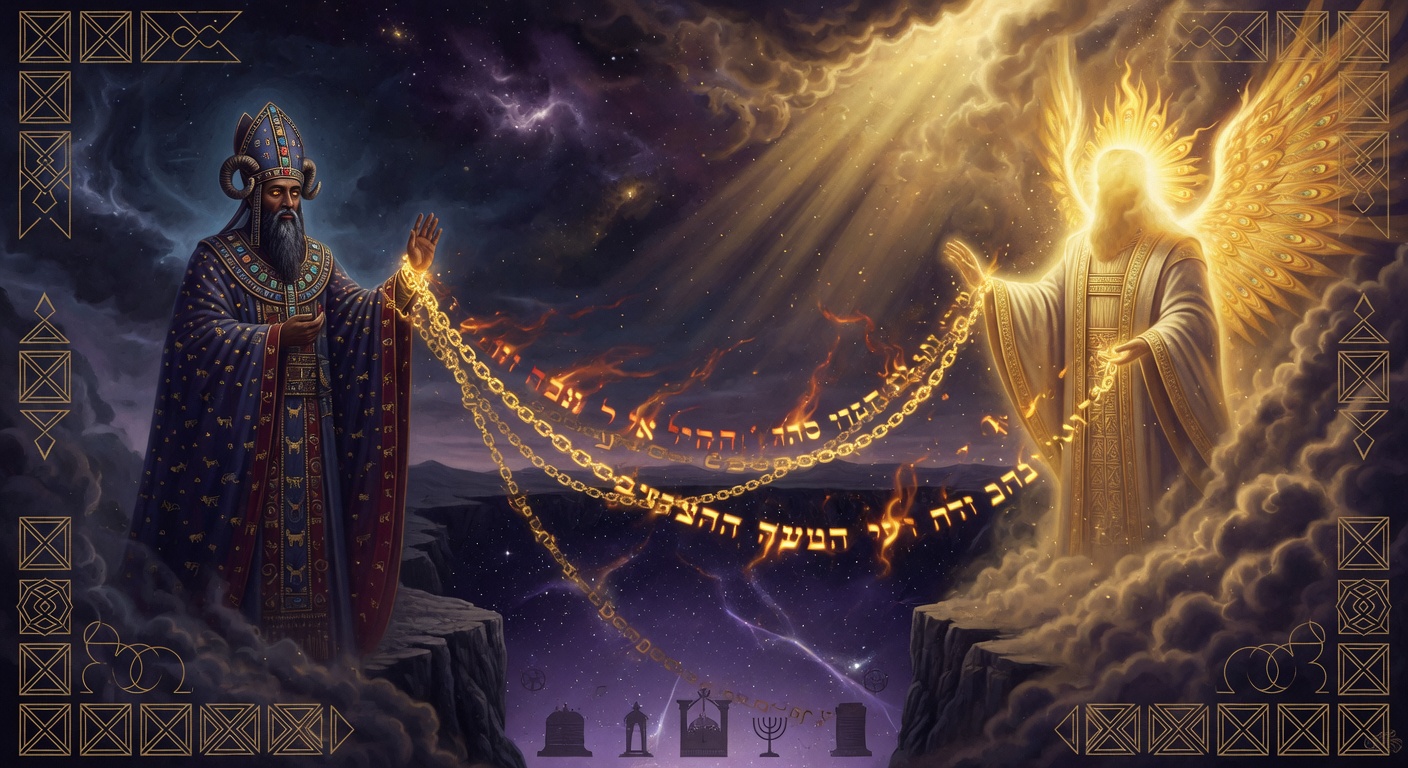
Levitical / Priestly Covenant
In the patriarchal narratives of the Book of Jubilees, the establishment of an enduring priestly line emerges through Jacob's deliberate selection of Levi, transforming a family lineage into a sacred institution dedicated to divine service. This covenant, presented as an eternal oath sworn by the Most High, binds Levi and his descendants to perpetual duties within the sanctuary, distinguishing them from other tribes through rites of atonement and offering. Jubilees 31 records Jacob's blessing upon Levi, invoking heavenly tablets that affirm his role as one who would draw near to God and mediate for Israel, while chapter 32 depicts Levi's ordination following a visionary ascent, where he receives priestly garments and instructions directly from angelic figures, underscoring the covenant's heavenly origin rather than mere human appointment. This priestly framework resonates within the wider Enochian tradition by linking earthly sanctuary service to cosmic order, as seen in the heavenly temple visions of 1 Enoch where angelic priests maintain purity before the divine throne. The covenant thus serves as a bridge between patriarchal history and eschatological restoration, ensuring that Israel's worship aligns with the unchanging patterns observed in the celestial realm. References in Jubilees 30 further tie Levi's zeal during the Shechem incident to his election, portraying the priesthood as both a reward for fidelity and a safeguard against defilement that could disrupt the sacred calendar and festivals. The Book of Jasher complements these accounts by elaborating Levi's early life and the transmission of priestly knowledge, reinforcing how the covenant preserves ritual expertise across generations amid Israel's formative trials. Together, these texts present the Levitical oath not as a temporary arrangement but as a foundational element of divine-human relations, one that anticipates the sanctuary's role in atoning for the land and sustaining Israel's identity until the renewal of all things.
Parties: God and Levi/his seed