War between Esau and Jacob
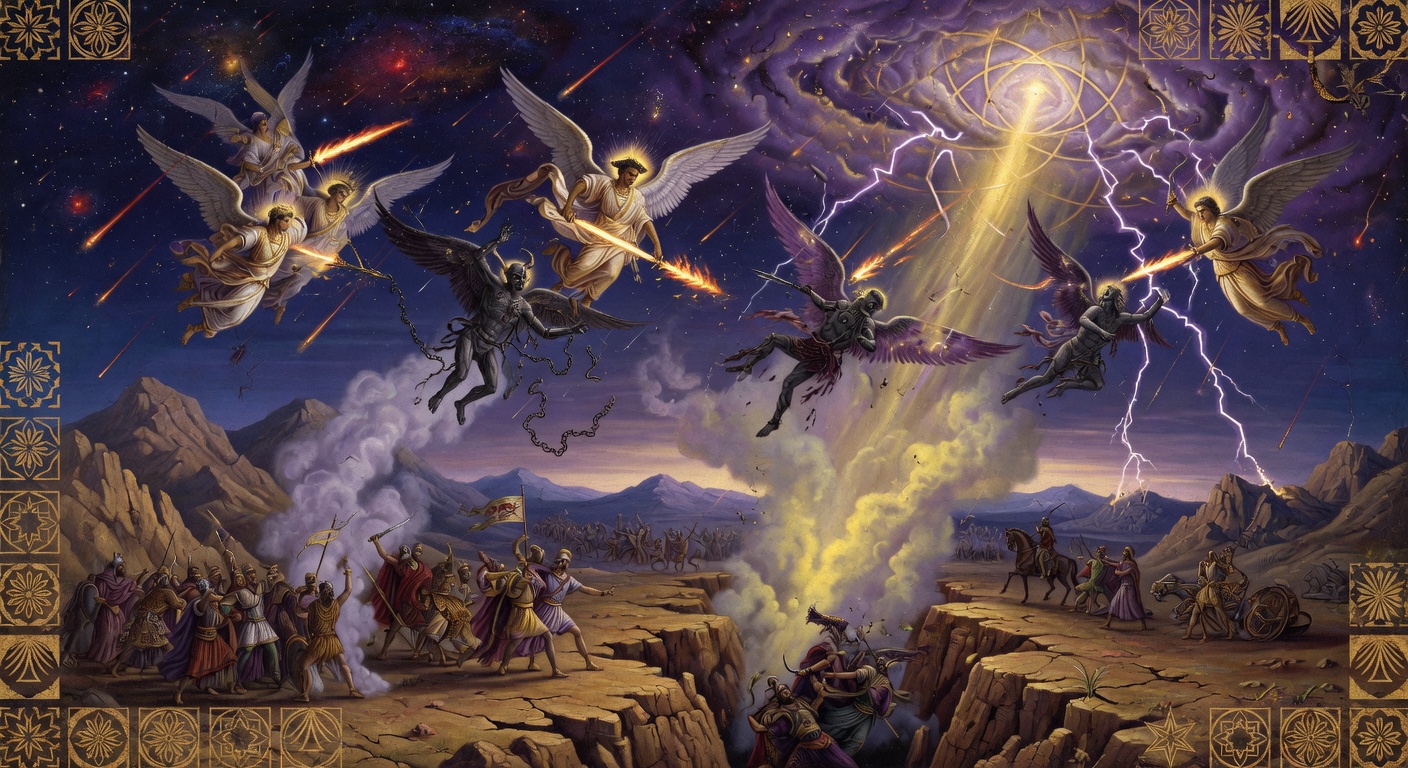
In the wake of Isaac's death, longstanding frictions between his sons over birthright and blessing ignite into armed confrontation, a pivotal episode preserved in the pseudepigraphal traditions that expand upon Genesis. These accounts portray the conflict not merely as a family quarrel but as a struggle over covenantal inheritance, with Esau's Edomite descendants arrayed against Jacob's household. The narratives underscore themes of divine election and protection that resonate across Second Temple literature, illustrating how ancestral rivalries prefigure later national hostilities between Israel and its neighbors. The Book of Jubilees provides the most structured retelling, placing the war in chapters 37 and 38. After Isaac's burial, Esau, influenced by his sons and the bitter memory of losing the blessing, assembles forces from Edom, Moab, and surrounding peoples to seize Canaan by force. Jubilees emphasizes Esau's oath-breaking and moral decline, contrasting it with Jacob's restraint; the ensuing battle sees Jacob's sons, particularly Judah, repel the invaders. Esau himself falls to Judah's arrow, fulfilling earlier patriarchal curses and securing Jacob's line in the land without direct angelic intervention, though the text implies providential oversight through the patriarch's prayers and the sons' unity. A parallel expansion appears in the Book of Jasher, especially chapters 56 and 57, which supplies tactical details of the campaign, including sieges and individual combats that heighten the drama of familial betrayal. Here the conflict extends beyond Esau's immediate challenge to involve his grandsons, reinforcing the generational stakes. Within the broader Enochic and Jubilean corpus, this episode functions as an etiological explanation for enduring enmity with Edom while echoing Enoch's own visions of cosmic judgment on rebellious powers. It thus bridges patriarchal history with apocalyptic expectations, reminding readers that fidelity to the covenant brings deliverance even amid overwhelming odds.
Details
- Era
- Patriarchs
- Category
- Patriarchal
- Participants
- Esau's forces vs. Jacob's sons
- Outcome
- Esau defeated and killed
- Divine Intervention
- No
Key Chapters
Key Passages
The War and Esau's Death
The Book of Jasher 37:1-30
 1aran was thirty-nine years old when he took her; and the wife of Haran conceived and bare a son, and he called his name Lot.
Esau's sons attack Jacob
The Book of Jasher 56:1-30
 1nd all the king's servants, princes, lords, governors, and judges, and all the inhabitants of the land, about nine hundred thousand men, stood opposite the furnace to see Abram.
Did You Know?
The conflict between the brothers escalated after Isaac's death into open warfare.
Esau assembled forces from Edom, Moab, and surrounding nations — a multinational coalition against Jacob.
Judah personally strikes down Esau with an arrow, fulfilling earlier patriarchal curses on the elder brother.
The war extends beyond Esau himself to his grandsons, making it a generational conflict.
Jacob's sons fight unified despite their own rivalries, demonstrating covenant solidarity under threat.