Canaan
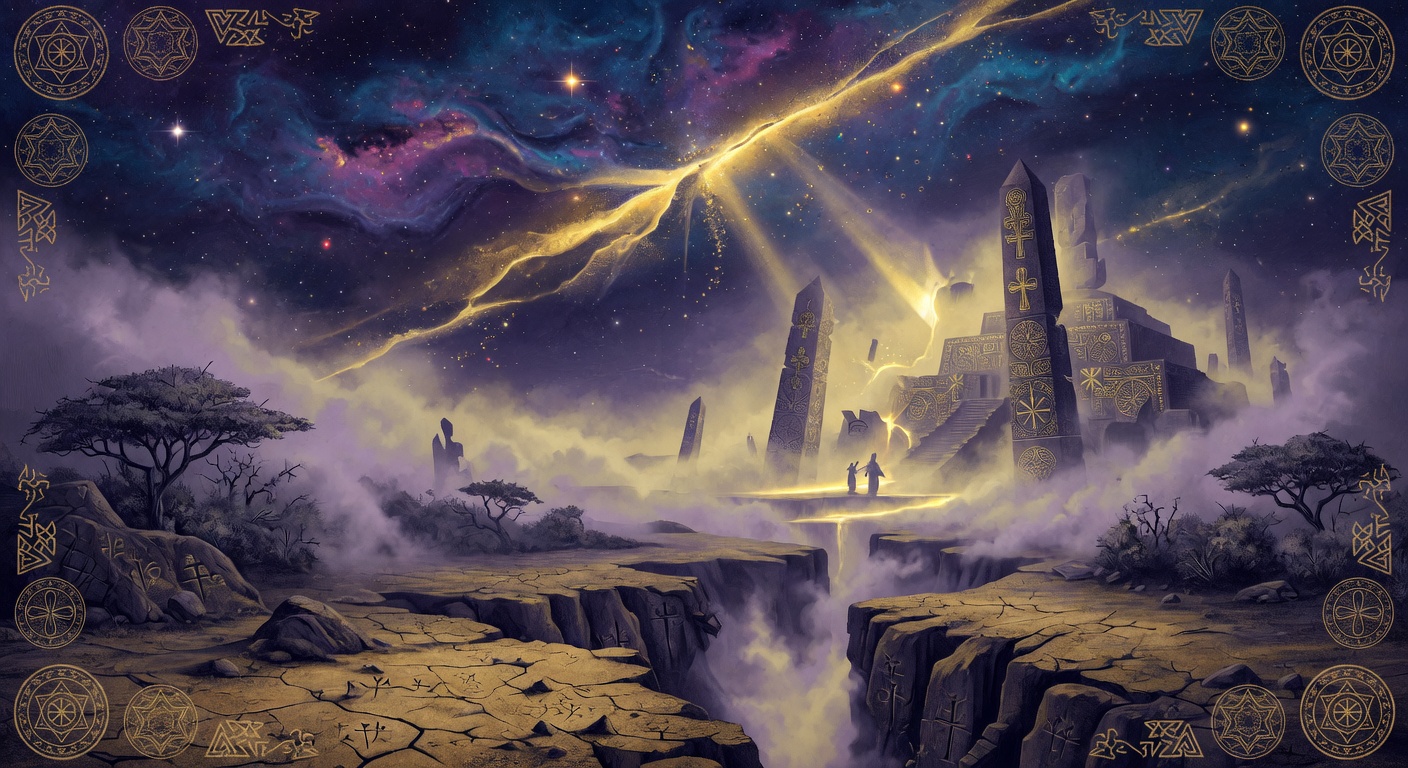
In the aftermath of the great deluge, the pseudepigraphal traditions preserved in Jubilees portray the earth as carefully apportioned among the sons of Noah according to an oath sworn before the divine throne. Shem receives the central and most blessed portion, encompassing the territory that would later become the focus of the patriarchal covenants, while Ham and Japheth are allotted lands to the south and north respectively. Yet the narrative highlights a profound transgression when Canaan, the youngest son of Ham, defies this sacred division and settles instead within the boundaries assigned to Shem, an act that precipitates both a lasting curse and the future conflicts over possession of the land. This improper seizure receives further elaboration in Jubilees 10, where Canaan’s refusal to depart for his allotted inheritance near the sea prompts Noah to pronounce a malediction upon him and his descendants. The text emphasizes that the land in question, stretching from the river of Egypt to the Euphrates and including sites later associated with Salem and Hebron, was never intended for Ham’s line. Within the broader Enochic corpus, this territorial drama unfolds against the lingering shadow of the Watchers’ descent on Mount Hermon and the violence of the giants, suggesting that the region carried an inherent spiritual tension long before the patriarchs arrived. The Book of Jasher supplements these accounts with vivid patriarchal episodes, depicting Abraham, Isaac, and Jacob moving through Canaan’s cities and altars while contending with its indigenous inhabitants, who are traced genealogically to the cursed son of Ham. These stories underscore the land’s dual character as both the stage for covenantal promises and a realm still marked by the consequences of antediluvian rebellion. In the Enochian tradition, Canaan thus emerges not merely as a geographical prize but as a contested inheritance whose boundaries and moral status remain intertwined with the cosmic order established after the flood.
Details
- Region
- Earth
Journey Paths
Key Chapters
Key Passages
Promised to Abraham
The Book of Jubilees 15:1-10
 1nd in the fifth year of the fourth week of this jubilee, in the third month, in the middle of the month, Abram celebrated the feast of the first-fruits of the grain harvest. And he offered new offerings on the altar, the first-fruits of the produce, unto the Lord, an heifer and a goat and a sheep on the altar as a burnt sacrifice unto the Lord; their fruit offerings and their drink offerings he offered upon the altar with frankincense. And the Lord appeared to Abram, and said unto him:
Patriarchs sojourn
The Book of Jasher 16:1-10
 1or when they sowed the ground in order that they might obtain food for their support, behold, thorns and thistles were produced which they did not sow.
Division among Noah sons
The Book of Jubilees 8:1-30
 1n the twenty-ninth jubilee, in the first week, in the beginning thereof Arpachshad took to himself a wife and her name was Rasu'eja, the daughter of Susan, the daughter of Elam, and she bare him a son in the third year in this week, and he called his name Kainam. And the son grew, and his father taught him writing, and he went to seek for himself a place where he might seize for himself a city. And he found a writing which former (generations) had carved on the rock, and he read what was thereon, and he transcribed it and sinned owing to it; for it contained the teaching of the Watchers in accordance with which they used to observe the omens of the sun and moon and stars in all the signs of heaven. And he wrote it down and said nothing regarding it; for he was afraid to speak to Noah about it lest he should be angry with him on account of it. And in the thirtieth jubilee, in the second week, in the first year thereof, he took to himself a wife, and her name was Melka, the daughter of Madai, the son of Japheth, and in the fourth year he begat a son, and called his name Shelah; for he said: 'Truly I have been sent.' , and Shelah grew up and took to himself a wife, and her name was Mu'ak, the daughter of Kesed, his father's brother, in the one and thirtieth jubilee, in the fifth week, in the first year thereof. And she bare him a son in the fifth year thereof, and he called his name Eber: and he took unto himself a wife, and her name was 'Azurad, the daughter of Nebrod, in the thirty-second jubilee, in the seventh week, in the third year thereof. And in the sixth year thereof, she bare him son, and he called his name Peleg; for in the days when he was born the children of Noah began to divide the earth amongst themselves: for this reason he called his name Peleg. And they divided (it) secretly amongst themselves, and told it to Noah. And it came to pass in the beginning of the thirty-third jubilee that they divided the earth into three parts, for Shem and Ham and Japheth, according to the inheritance of each, in the first year in the first week, when one of us who had been sent, was with them. And he called his sons, and they drew nigh to him, they and their children, and he divided the earth into the lots, which his three sons were to take in possession, and they reached forth their hands, and took the writing out of the bosom of Noah, their father.
Jacob returns to Canaan
The Book of Jubilees 29:1-20
1nd it came to pass when Rachel had borne Joseph, that Laban went to shear his sheep; for they were distant from him a three days' journey. And Jacob saw that Laban was going to shear his sheep, and Jacob called Leah and Rachel, and spake kindly unto them that they should come with him to the land of Canaan. For he told them how he had seen everything in a dream, even all that He had spoken unto him that he should return to his father's house, and they said: 'To every place whither thou goest we will go with thee.' And Jacob blessed the God of Isaac his father, and the God of Abraham his father's father, and he arose and mounted his wives and his children, and took all his possessions and crossed the river, and came to the land of Gilead, and Jacob hid his intention from Laban and told him not. And in the seventh year of the fourth week Jacob turned (his face) toward Gilead in the first month, on the twenty-first thereof. And Laban pursued after him and overtook Jacob in the mountain of Gilead in the third month, on the thirteenth thereof. And the Lord did not suffer him to injure Jacob; for he appeared to him in a dream by night. And Laban spake to Jacob. And on the fifteenth of those days Jacob made a feast for Laban, and for all who came with him, and Jacob sware to Laban that day, and Laban also to Jacob, that neither should cross the mountain of Gilead to the other with evil purpose. And he made there a heap for a witness; wherefore the name of that place is called: 'The Heap of Witness,' after this heap. But before they used to call the land of Gilead the land of the Rephaim; for it was the land of the Rephaim, and the Rephaim were born (there), giants whose height was ten, nine, eight down to seven cubits. And their habitation was from the land of the children of Ammon to Mount Hermon, and the seats of their kingdom were Karnaim and Ashtaroth, and Edrei, and Misur, and Beon. And the Lord destroyed them because of the evil of their deeds; for they were very malignant, and the Amorites dwelt in their stead, wicked and sinful, and there is no people to-day which has wrought to the full all their sins, and they have no longer length of life on the earth. And Jacob sent away Laban, and he departed into Mesopotamia, the land of the East, and Jacob returned to the land of
Sons of Jacob conquer cities
The Book of Jasher 34:1-30
1nd now therefore give me the child, that we may slay him before his evil springs up against us, and I will give thee for his value, thy house full of silver and gold.
Did You Know?
The land promised to Abraham and his descendants.
The setting for most of the patriarchal stories and the later conquest.
Canaan son of Ham illegally settled in Shem's territory — the land's contested status begins with theft.
Abraham claims it spiritually through altar-building before any physical possession occurs.
The land's boundaries (Nile to Euphrates) far exceed what Israel ever actually controlled.