Isaac
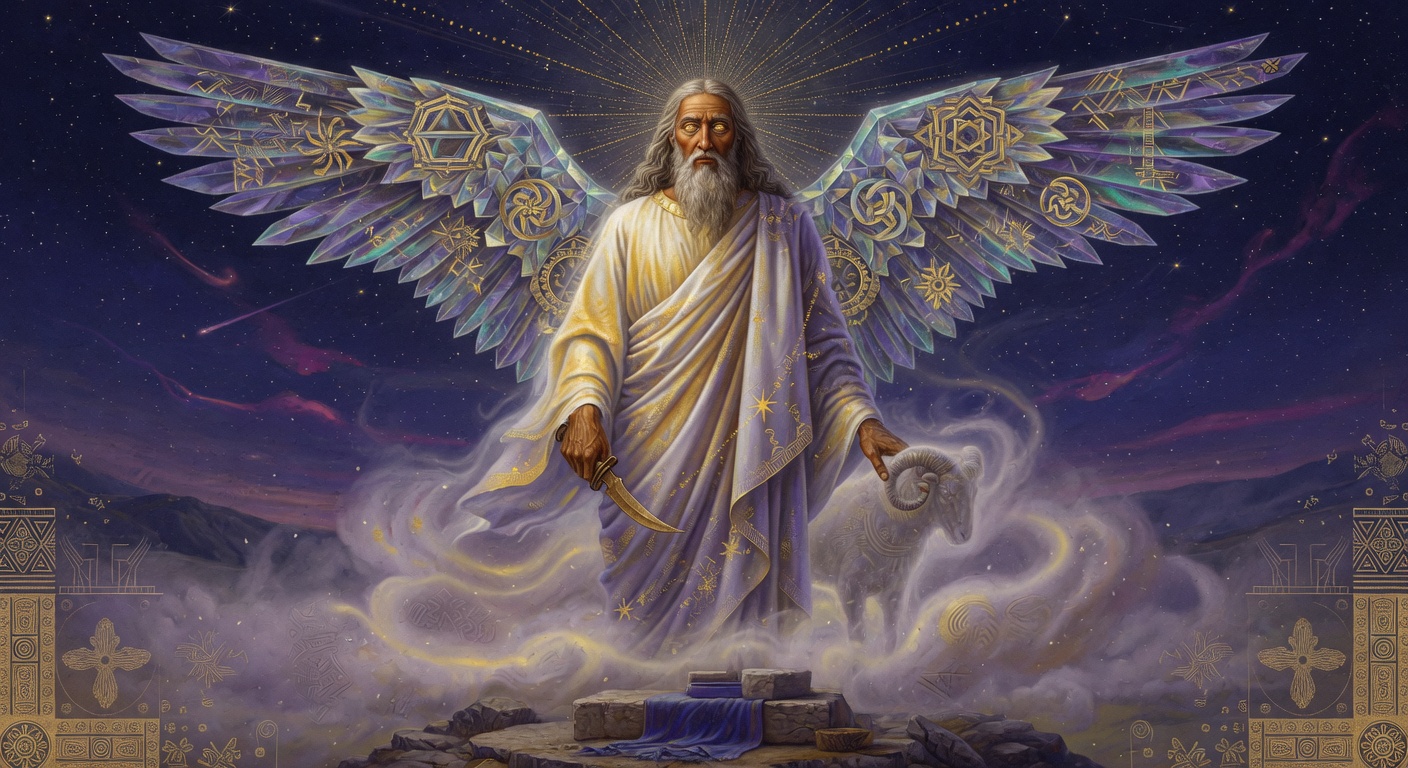
Among the patriarchal narratives elaborated in the pseudepigraphal tradition, few figures embody the tension between divine promise and human frailty as sharply as the son born to Abraham and Sarah in their advanced years. The Book of Jubilees frames this birth as the pivotal fulfillment of the covenant first announced to Abraham, occurring after years of apparent delay that test the faithfulness of the entire household. In Jubilees 16 the text underscores that the child arrives precisely at the time foretold by the angels who visited Abraham, transforming what might have seemed an improbable late-life event into a demonstration of heavenly timing and the inviolability of the divine word. The narrative of his early years receives further expansion in both Jubilees and the Book of Jasher, where the household’s joy is tempered by ongoing concerns over lineage and covenantal purity. Jubilees 17 records the feast celebrating his growth and the subtle rivalries that surface with other offspring, while Jasher supplies additional domestic detail that highlights Sarah’s protectiveness and Abraham’s careful instruction in the ways of righteousness. These accounts position the child not merely as an heir but as the living sign that the promises made to the first patriarch would continue through a specific, chosen line rather than through broader tribal affiliations. The most dramatic episode, however, remains the near-sacrifice recounted in Jubilees 18 and paralleled in Jasher. Here the event is presented as a deliberate divine test of Abraham’s obedience, with the son’s willing participation and calm demeanor during the journey to Mount Moriah underscoring themes of faithfulness under extreme trial. Jubilees adds angelic oversight and calendrical precision to the episode, linking it to the festival of weeks and thereby embedding the story within a larger liturgical framework that later readers would associate with covenant renewal. Within the broader Enochic corpus, this trial resonates with the emphasis on endurance found throughout 1 Enoch, illustrating how individual obedience sustains the cosmic order established at creation. Ultimately, the figure serves as a bridge in these texts between the primordial revelations given to Enoch and the ongoing history of Israel, his survival ensuring the transmission of sacred knowledge and law to subsequent generations.
Biography
- Occupation
- Patriarch
- Father
- Abraham
- Mother
- Sarah
- Era
- Patriarchal
Family
Did You Know?
Isaac was the child of promise born to Abraham and Sarah in their old age.
He was nearly sacrificed by his father on Mount Moriah as a test of faith.
Key Chapters
Key Passages
Birth of Isaac
The Book of Jubilees 16:2-6
Sarah conceives and bears Isaac at the set time. Abraham circumcises him on the eighth day. Great rejoicing in the household.
 2nd Sarah laughed, for she heard that we had spoken these words with Abraham, and we admonished her, and she became afraid, and denied that she had laughed on account of the words. And we told her the name of her son, as his name is ordained and written in the heavenly tablets (i.e.) Isaac, 4,5 And (that) when we returned to her at a set time, she would have conceived a son. And in this month the Lord executed his judgments on Sodom, and Gomorrah, and Zeboim, and all the region of the Jordan, and He burned them with fire and brimstone, and destroyed them until this day, even as I have declared unto thee all their works, that they are wicked and sinners exceedingly, and that they defile themselves and commit fornication in their flesh, and work uncleanness on the earth.
The Binding of Isaac
The Book of Jubilees 18:2-6
God tests Abraham by commanding the sacrifice of Isaac on Mount Moriah. Isaac carries the wood; Abraham builds the altar. An angel stays his hand and a ram is provided.
 2od. And he built an altar, and he placed the wood on the altar, and bound Isaac his son, and placed him on the wood which was upon the altar, and stretched forth his hand to take the knife to slay Isaac his son. And I stood before him, and before the prince Mastema, and the Lord said, 'Bid him not to lay his hand on the lad, nor to do anything to him, for I have shown that he fears the Lord.' And I called to him from heaven, and said unto him: 'Abraham, Abraham;' and he was terrified and said: 'Behold, (here) am I.' And I said unto him: 'Lay not thy hand upon the lad, neither do thou anything to him; for now I have shown that thou fearest the Lord, and hast not withheld thy son, thy first-born son, from me.' And the prince Mastema was put to shame; and Abraham lifted up his eyes and looked, and, behold a ram caught . . . by his horns, and Abraham went and took the ram and offered it for a burnt-offering in the stead of his son. And Abraham called that place 'The Lord hath seen', so that it is said the Lord hath seen: that is
Isaac's Blessing and Wells
The Book of Jasher 28:2-6
Isaac dwells in Gerar, digs wells, and receives the same covenant blessing from God that was given to Abraham.
2nd Peleg his brother begat Yen, and Yen begat Serug, and Serug begat Nahor and Nahor begat Terah, and Terah was thirty-eight years old, and he begat Haran and Nahor.