Destruction of Sodom and Gomorrah
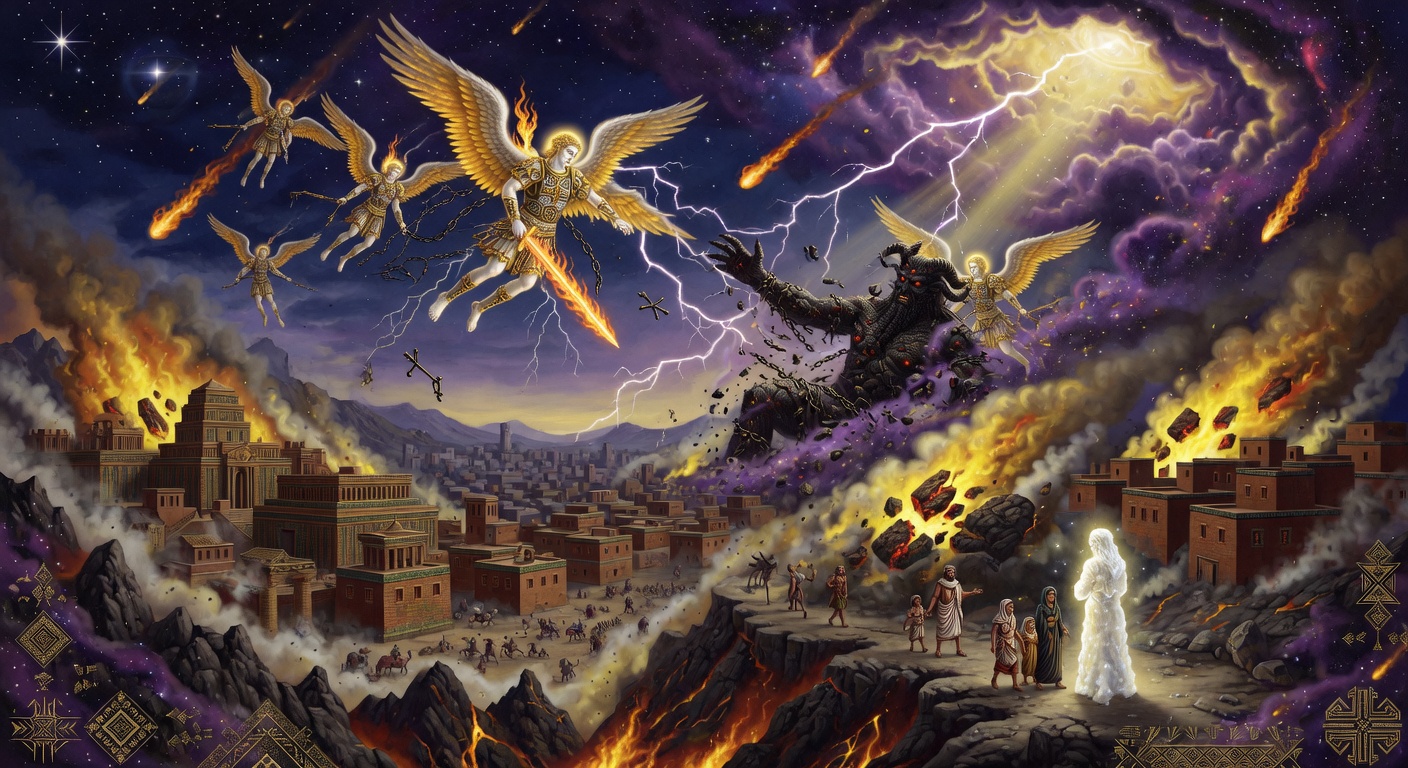
The account of Sodom and Gomorrah’s overthrow stands as one of the most vivid portrayals of divine retribution preserved in the ancient pseudepigrapha. In the Book of Jubilees the episode is placed squarely within Abraham’s lifetime, where the patriarch intercedes for the cities while the angels descend to rescue Lot and his household before sulfur and fire descend from heaven (Jubilees 16:5–7). The text emphasizes that the inhabitants had defiled themselves through fornication and injustice, thereby provoking a judgment that simultaneously purges the land and serves as an enduring warning for later generations. This retelling expands the Genesis narrative by underscoring the covenantal stakes: the same angelic emissaries who once pronounced blessing upon Abraham now execute punishment upon those who reject the moral order established at creation. The Book of Jasher supplies further dramatic detail, recounting how the angels urged Lot to flee without looking back and how the cities were consumed in a single night of brimstone and earthquake (Jasher 19:24–28). Here the destruction is framed as the climax of a prolonged conflict between the righteous remnant and the surrounding culture of violence and idolatry. Lot’s wife becomes the cautionary emblem of lingering attachment to condemned ways, while the survival of his daughters highlights the narrow margin by which the line of the covenant is preserved. These expansions keep the focus on human moral agency rather than impersonal catastrophe. Within the Enochic corpus the same event functions typologically. Although 1 Enoch does not retell the story in full, its visions of eschatological fire—particularly the seething valleys and burning mountains described in the Book of Noah (1 Enoch 67)—echo the language of brimstone and overturning used for Sodom. The author thereby positions the cities’ fate as a prototype for the final judgment awaiting the Watchers and all who follow their example of corruption. In this tradition the overthrow is less an isolated historical episode than a recurring pattern: divine patience yields to purifying wrath when iniquity reaches its full measure. Taken together, these texts transform the destruction of the cities into a foundational symbol within Enochian thought. The event illustrates the principle that heavenly decrees are executed with precision, that angelic mediation both rescues and destroys, and that the memory of past judgments equips the righteous to endure future ones. Readers of the pseudepigrapha are thus invited to see Sodom not merely as a ruined locale but as a standing testimony to the moral structure of the cosmos itself.
Details
- Era
- Patriarchs
- Category
- Judgment
- Participants
- Angels vs. Cities of the Plain
- Outcome
- Cities destroyed by fire from heaven
- Divine Intervention
- Yes
Key Chapters
Key Passages
The Destruction
The Book of Jasher 19:1-30
 1ut the sons of men would not hearken to them, nor incline their ears to their words, and they were stiffnecked.
Did You Know?
The destruction is one of the most famous divine judgments in the 3 books.