Tower of Babel
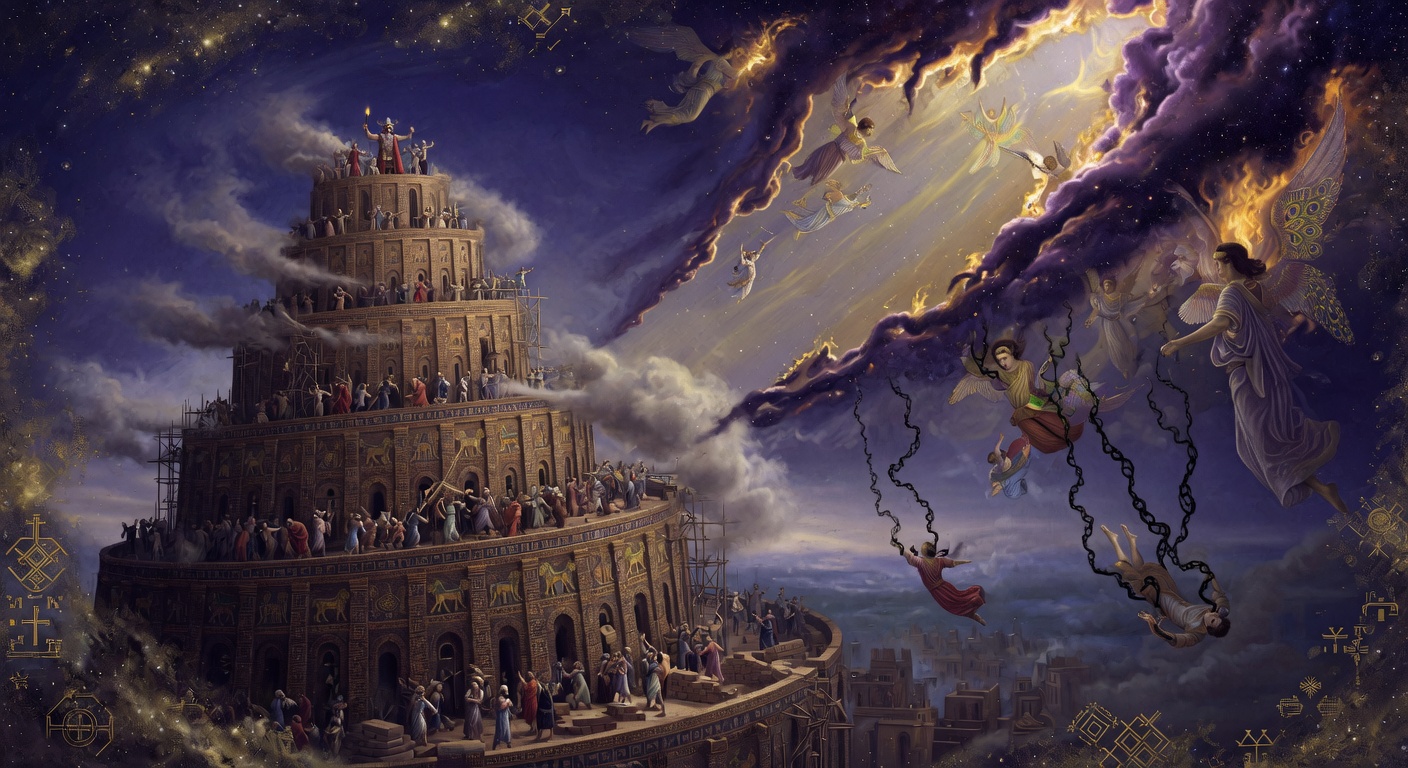
Following the renewal of humanity after the flood waters receded, the descendants of Noah sought to reclaim dominion over the earth by constructing an immense structure in the plain of Shinar. Ancient accounts preserved in the Book of Jubilees and the Book of Jasher portray this endeavor as a collective act of defiance against the divine command to disperse and multiply across the lands. Under the leadership of Nimrod, whose lineage traces back through Cush, the people resolved to erect a city and a towering edifice whose summit would reach into the heavens, ensuring their name endured and shielding them from future judgments. Jubilees 10:18-21 notes how they baked bricks and used bitumen, laboring for years in unified purpose until the project provoked heavenly intervention. The texts emphasize that this ambition stemmed not merely from architectural pride but from a deeper rejection of the covenantal order established with Noah. In Jasher 9:23-35, Nimrod is depicted rallying the people with promises of security and renown, while the Book of Jubilees records the descent of divine beings who confused their single language into seventy tongues, halting construction and scattering the builders. This division is presented as a measured act of restraint rather than total destruction, preserving the human race while reasserting boundaries between heaven and earth. Within the broader Enochian corpus, such events echo the earlier transgressions of the Watchers, illustrating recurring patterns of human-angelic overreach that necessitate renewed divine oversight. These narratives situate the tower within a larger framework of generational accountability, where the confusion of speech marks the origin of distinct nations and the transmission of sacred knowledge through select lineages. The accounts underscore how linguistic fragmentation preserved fragments of primordial wisdom, later entrusted to figures like Enoch whose heavenly journeys reveal the mechanisms of cosmic order. Readers encounter here a meditation on unity's perils and the enduring tension between human aspiration and heavenly sovereignty.
Did You Know?
Jasher greatly expands the story with Nimrod as the central villain.
The confusion of languages leads directly to the rise of different nations.