Tree of Life
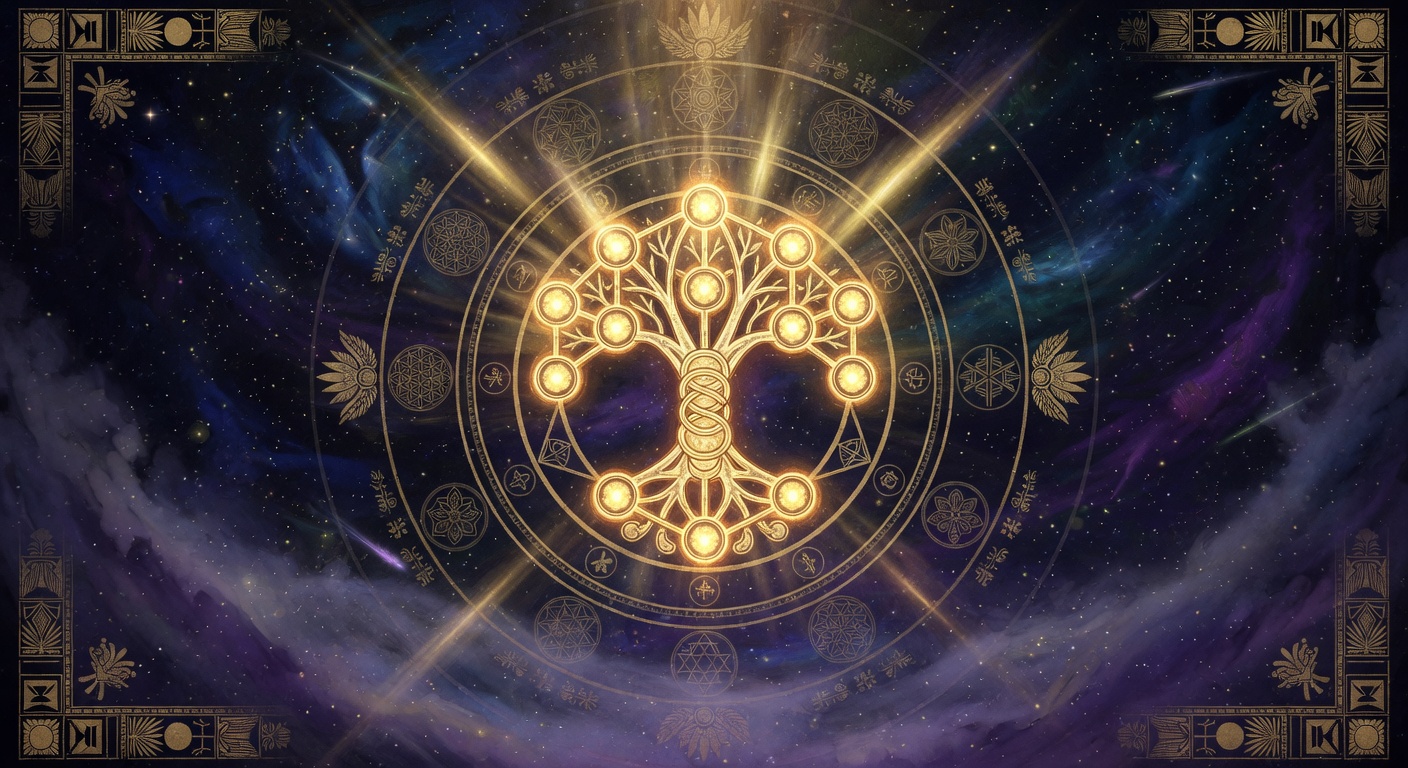
Among the visionary accounts preserved in the Enochic corpus, this arboreal image emerges as a potent emblem of divine provision and eschatological hope, particularly in the descriptions of a renewed creation reserved for the faithful. In 1 Enoch 25, the seer is shown a fragrant tree of extraordinary height and beauty situated on a high mountain, its fruit likened to clusters of dates and granted exclusively to the elect after the judgment of the wicked. This passage situates the tree within a transformed landscape where the righteous enjoy its produce as a sign of their vindication and eternal life, echoing broader themes of reversal from the primordial loss in Eden to a future restoration under divine sovereignty. The detail underscores how the text transforms an ancient garden motif into a promise of selective access, available only after cosmic upheaval and moral purification. The Book of Jubilees develops this symbolism by anchoring the tree firmly in the original garden narrative while projecting its significance forward into Israel's covenantal future. Jubilees 3 recounts the placement of the tree within Eden alongside the tree of knowledge, emphasizing its role as a source of life that remains inaccessible after the expulsion yet points toward eventual reclamation. Later chapters, such as Jubilees 4 and 8, associate it with the restoration of sacred space and the renewal of the earth, portraying it as integral to the return of paradisiacal conditions for those who observe the divine law. This linkage highlights a continuity between primeval history and apocalyptic expectation, where the tree functions less as a static relic and more as a marker of covenant fidelity across generations. Within the wider Enochian tradition, including echoes in the Book of Jasher's retellings of patriarchal encounters with Edenic elements, the image reinforces a theology of selective immortality and cosmic order. It invites readers to contemplate how the righteous, through wisdom and obedience, participate in a reality where death is overcome and creation is healed, offering a bridge between the fallen world and the age to come.
Details
- Symbolizes
- Eternal Life and Healing
Key Chapters
Key Passages
Tree in the New Creation
The Book of Enoch 25:1-7
 1nd he said unto me: ‘Enoch, why dost thou ask me regarding the fragrance of the tree, and why dost thou wish to learn the truth?’
Did You Know?
In Enoch it is reserved for the elect in the new age.
Its fruit gives life and its leaves healing (cf. Revelation 22).
Its fragrance reaches the elect even before they eat its fruit — holiness precedes access.
Located on the highest of seven mountains in Enoch's vision, requiring ascent to reach it.
After judgment, it is transplanted to the temple — moving from wilderness to civilization.