Throne of Glory
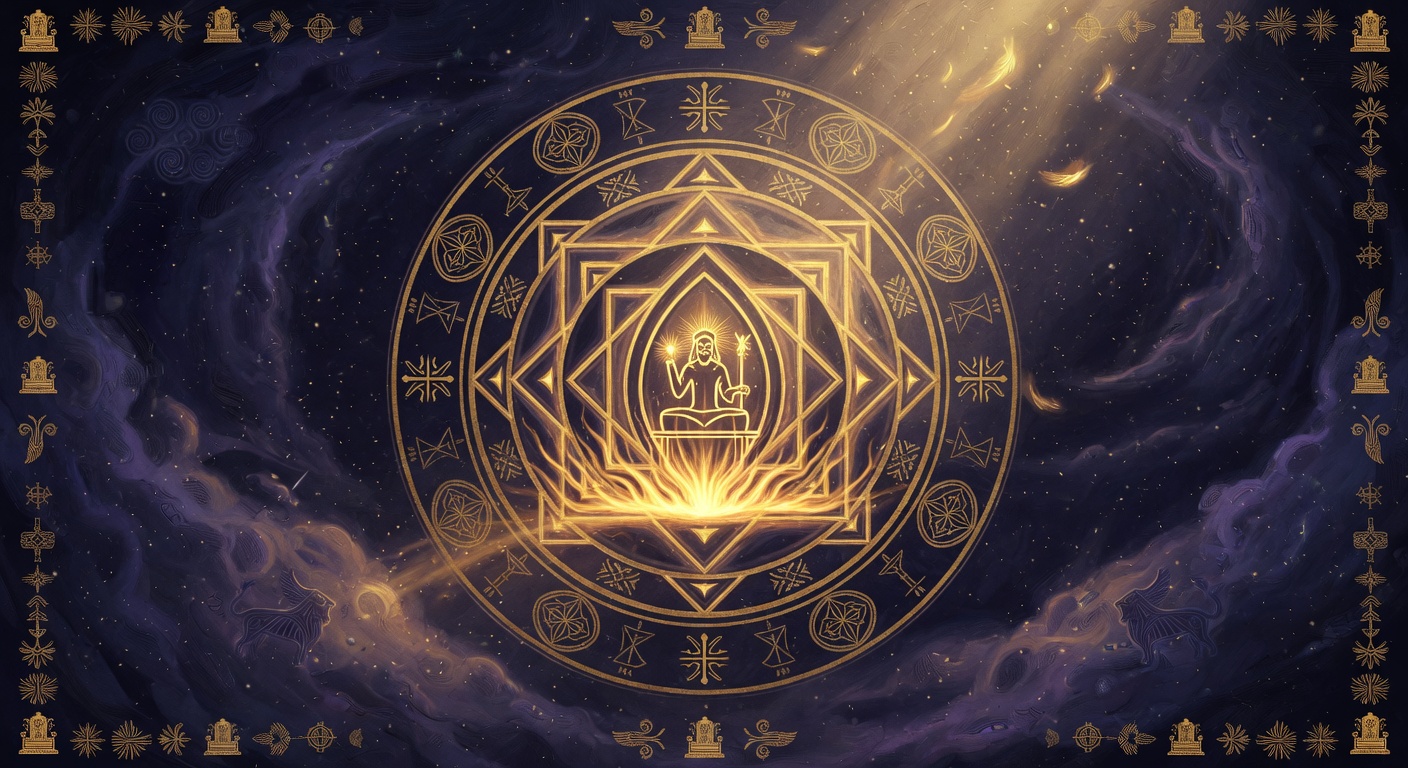
The Throne of Glory is the seat of divine sovereignty in the heavenly court - the place where the Son of Man is formally installed to execute judgment over kings, rulers, and all who oppressed the righteous. In the visionary accounts preserved within the Enochic corpus, a majestic seat of divine authority emerges as the focal point for the final reckoning of humanity. This image appears most vividly in the Parables of Enoch, where the seer witnesses the Elect One or Son of Man assuming a position of supreme judgment over kings, rulers, and the righteous alike. The motif draws on earlier throne visions such as those in chapter 14, yet it shifts emphasis toward an eschatological figure who executes justice on behalf of the Lord of Spirits, underscoring the transition from primordial revelation to end-time vindication. The Parables locate this throne explicitly in passages such as 1 Enoch 62:2-3 and 69:29, where the chosen one is installed upon it and the books of the living are opened. Here the throne functions not merely as furniture of heaven but as the concrete expression of divine kingship delegated to a human-like agent. Surrounding angels and the congregation of the righteous witness the separation of the wicked, who are handed over to punishment, while the elect receive eternal blessing. Such scenes echo and expand the throne-room imagery found in the Book of Daniel, yet they place greater weight on the moral transformation effected by the occupant’s presence. Within the wider Enochian tradition, the throne therefore embodies the convergence of cosmic order, ethical judgment, and royal authority. Its appearance signals that earthly oppression will be reversed by a heavenly court whose decisions are irrevocable. Readers of the Parables are invited to see history as already oriented toward this decisive moment, when hidden deeds are exposed and the oppressed are exalted. The symbol thus sustains hope for communities that preserved these texts, assuring them that justice, though delayed, remains securely enthroned.
Details
- Symbolizes
- Divine Sovereignty and the Son of Man
Key Chapters
Key Passages
Vision of the Throne
The Book of Enoch 46:1-8
And there I saw One who had a head of days, And His head was white like wool, And with Him was another being whose count...
1 nd there I saw One who had a head of days, And His head was white like wool, And with Him was another being whose countenance had the appearance of a man, And his face was full of graciousness, like one of the holy angels.
Enoch sees the throne
The Book of Enoch 14:18-25
And I looked and saw therein a lofty throne: its appearance was as crystal, and the wheels thereof as the shining sun, a...
18nd I looked and saw therein a lofty throne: its appearance was as crystal, and the wheels thereof as the shining sun, and there was the vision of Cherubim.
Did You Know?
The seat from which the Son of Man will judge all creation.
It is the ultimate symbol of divine justice in the Parables.
Streams of fire flow beneath it, making approach impossible without divine invitation.
The Son of Man does not merely sit on it - he is installed by the Lord of Spirits in a formal investiture.
Before it, all secrets are revealed - nothing remains hidden from the one enthroned.