Jacob's Stone Pillar
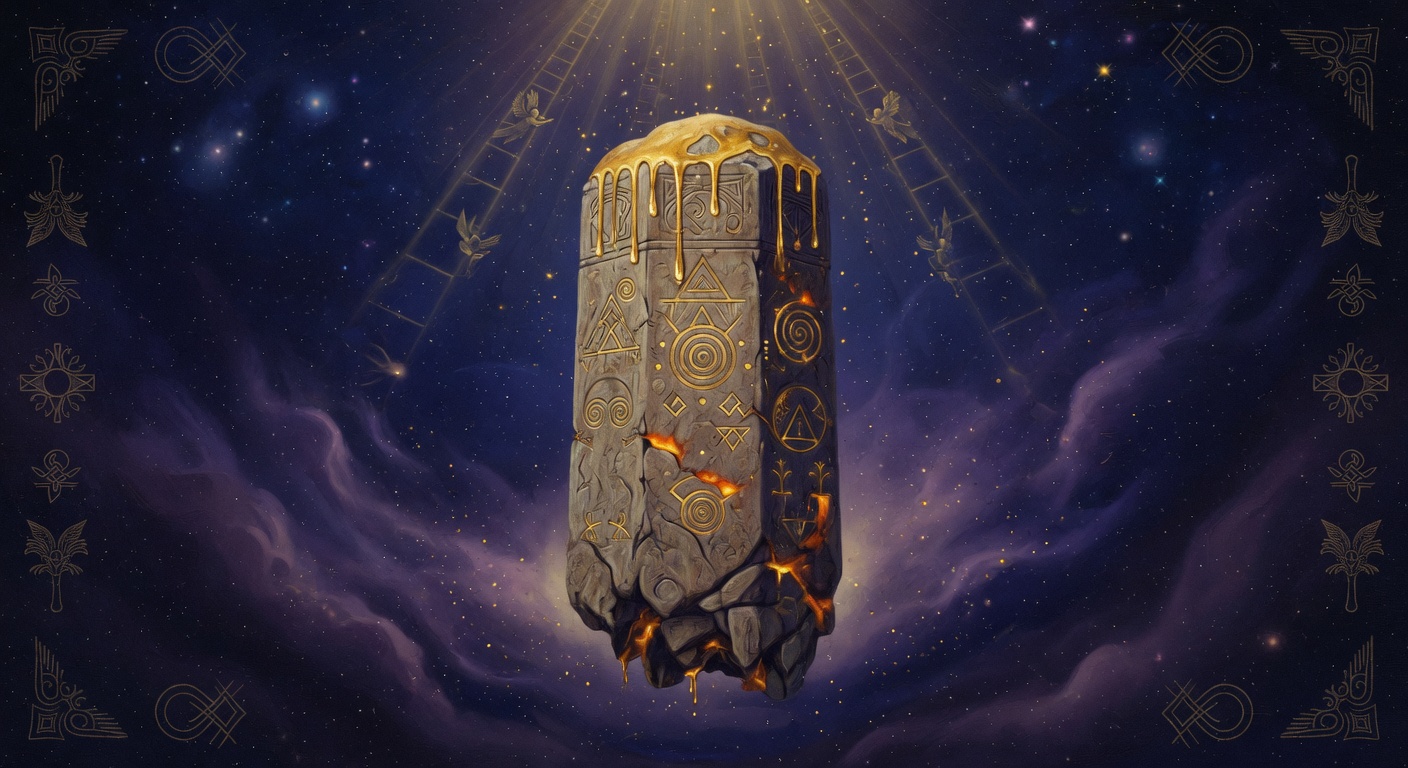
Jacob's Stone Pillar is the stone he sets up at Bethel after his vision of the ladder - anointed with oil and declared to be God's house, transforming an ordinary rock into a permanent sacred marker through divine encounter. Jasher 30 and Jubilees 27 both record the erection of the pillar, the oil anointing, and Jacob's vow. He returns to the same site twenty years later and God again appears, reaffirming the covenant. The pillar demonstrates how divine encounter transforms ordinary matter into sacred space - a physical anchor for an invisible reality. Within the interconnected tradition preserved across the Book of Enoch, the Book of Jubilees, and the Book of Jasher, this concept resonates with broader patterns of divine order, human response, and cosmic consequence. The pseudepigraphal sources provide perspectives and details absent from other ancient texts, offering readers a more complete understanding of how ancient communities understood the relationship between heavenly realities and earthly experience. These expanded accounts invite sustained reflection on the enduring significance of this tradition within the larger framework of Second Temple Jewish thought and its influence on later religious imagination.
Details
- Category
- Memorial
- Associated With
- Jacob (Israel)
- Locations
- Bethel
Key Chapters
Key Passages
Pillar at Bethel
The Book of Jubilees 27:19-27
And Jacob went from the Well of the Oath to go to Haran on the first year of the second week in the forty-fourth jubilee...
 19nd Jacob went from the Well of the Oath to go to Haran on the first year of the second week in the forty-fourth jubilee, and he came to Luz on the mountains, that is, Bethel, on the new moon of the first month of this week, 2115 A.M. and he came to the place at even and turned from the way to the west of the road that night: and he slept there; for the sun had set.
Did You Know?
Jacob uses the stone as a pillow the night of his vision - intimacy with the sacred.
He anoints it with oil, the earliest recorded anointing ritual in the tradition.
He names the place Bethel (House of God) based on the experience, not prior knowledge.
Twenty years later he returns and God appears again at the same pillar.
The vow to tithe everything is made here - connecting worship to economics.