Feast of Tabernacles (Sukkot)
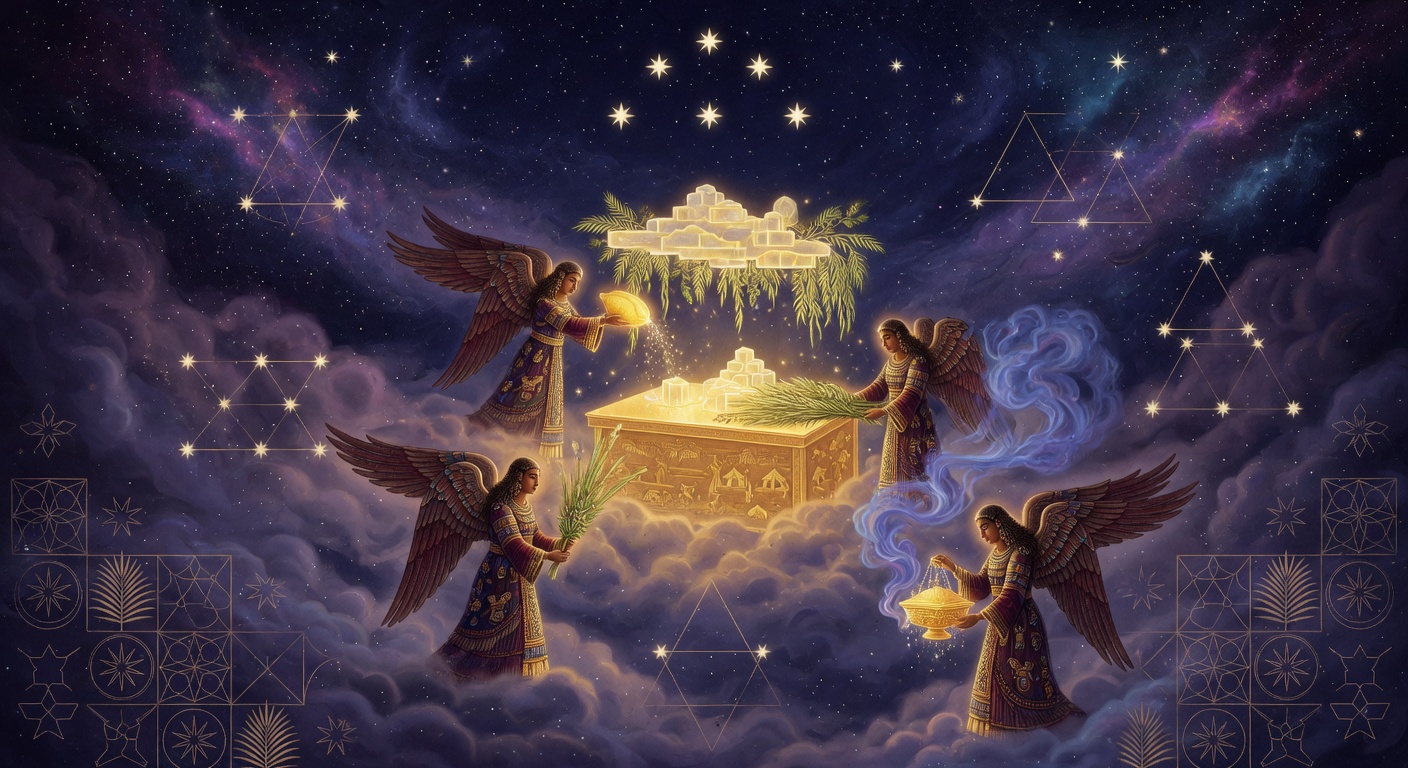
Among the patriarchal narratives preserved in ancient Jewish literature, this eight-day observance stands out for its deep roots in the lives of the forefathers, long before the revelation at Sinai. The Book of Jubilees recounts how Abraham first built booths and kept the festival with joy in the land of Canaan, offering sacrifices each day and dwelling in temporary shelters as a sign of gratitude for the harvest and divine protection. This account in Jubilees 16 portrays the feast not as a later Mosaic institution but as an eternal decree written on heavenly tablets, observed by angels in heaven and commanded for all generations of Israel. The text stresses the festival’s connection to the cycles of creation and the proper reckoning of time. By aligning its dates with the 364-day solar calendar revealed to Enoch, Jubilees integrates the feast into a cosmic order free from lunar drift, ensuring its fixed place each year. Abraham’s celebration includes specific rituals such as processions around the altar and prayers for renewal, elements that underscore the feast’s dual focus on historical remembrance and ongoing agricultural blessing. Within the Enochian and Jubilees tradition, the observance also carries eschatological weight. It serves as a foretaste of the restoration when all nations will ascend to Jerusalem to keep the feast, echoing the heavenly pattern Enoch glimpsed during his tours of the cosmos. The Book of Jasher supplements this picture by noting how later patriarchs renewed similar communal gatherings, reinforcing the continuity of sacred time across generations. Such descriptions invite readers to see the festival as more than historical recall; it embodies an unbroken covenantal rhythm that links earthly worship with angelic service and the enduring promise of divine presence.
Details
- Category
- Fall
- Timing
- 15-21 Tishri
- Season
- Fall
Key Chapters
Key Passages
Tabernacles Regulations
The Book of Jubilees 16:20-31
Verse text not available.
Abraham Observes It
The Book of Jubilees 16:20-31
Verse text not available.
Isaac born during Tabernacles
The Book of Jubilees 16:12-19
Verse text not available.
Did You Know?
Abraham is the first human to observe it in Jubilees.
It includes living in booths and specific sacrifices for eight days.
Abraham is credited as the first human to build booths and celebrate this feast in Canaan.
The eight-day duration includes specific sacrifices that decrease in number each day.
Living in temporary shelters recalls both wilderness dependence and eschatological hope.