Adam
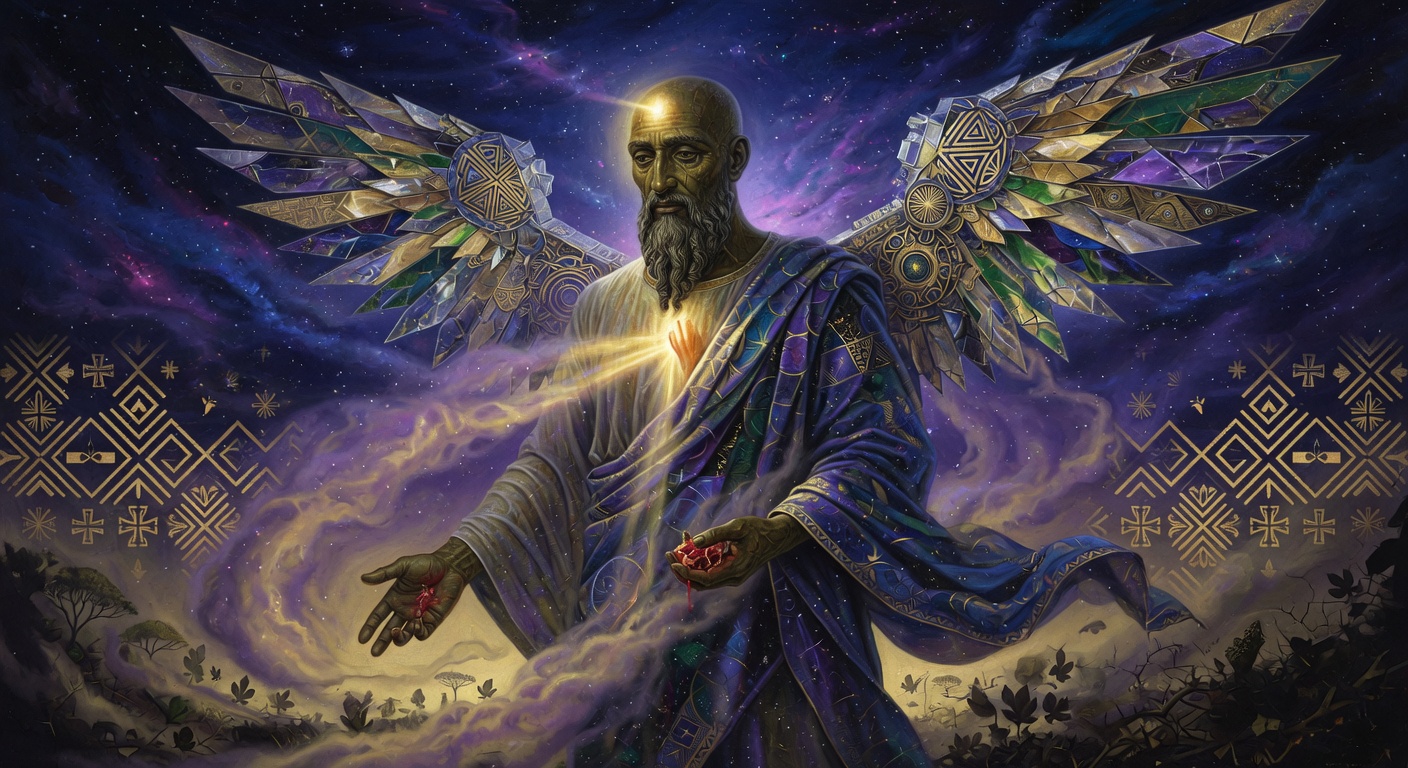
In the pseudepigraphal traditions preserved within the Book of Jubilees and related Enochic writings, the first human occupies a pivotal position as the origin point for both divine order and human frailty. These texts expand the terse Genesis account into a detailed chronicle of creation, transgression, and enduring consequences, situating the primordial man within a framework of heavenly laws, calendrical precision, and the transmission of sacred knowledge. Jubilees in particular frames his story as the foundation for subsequent patriarchal history, emphasizing how his actions established patterns of obedience and punishment that reverberate through later generations. Jubilees 2 recounts the creation of the first man on the sixth day alongside the animals, yet distinguishes him by divine image and dominion, while chapter 3 elaborates his placement in Eden, the naming of creatures, and the fateful consumption of the forbidden fruit that results in expulsion and the introduction of mortality. The narrative adds chronological markers, such as the precise timing of his residence in the garden for seven years before the fall, and links these events to the observance of festivals and the transmission of written instruction. Such expansions underscore the text’s interest in portraying early humanity as bound by an implicit legal and ritual structure from the outset, rather than merely subject to a singular prohibition. Within the broader Enochic corpus, the first man’s legacy intersects with themes of angelic rebellion and cosmic disorder detailed in 1 Enoch. The descent of the Watchers in chapters 6–16 is presented as an amplification of the primordial transgression, introducing further corruption that compounds the mortality and toil already imposed after Eden. The Book of Jasher complements these accounts by preserving additional traditions of the first man’s later life, including his interactions with descendants and the preservation of certain antediluvian secrets, thereby illustrating how his story serves as a bridge between creation and the flood judgment. This figure thus embodies both the ideal of original righteousness and the enduring effects of disobedience, providing the Enochian tradition with a lens through which to explore humanity’s place amid heavenly hierarchies and divine decrees.
Biography
- Occupation
- First Man
- Era
- Creation / Antediluvian
Did You Know?
Adam was created on the sixth day from the dust of the earth.
He and Eve were placed in the Garden of Eden and given dominion over creation.
Key Chapters
Key Passages
Creation of Adam and Eve
The Book of Jubilees 2:6-10
God creates Adam from the dust on the sixth day and places him in the Garden of Eden to till and keep it. Eve is created from his rib as a helpmeet.
 6here (were) two and twenty heads of mankind from Adam to Jacob, and two and twenty kinds of work were made until the seventh day; this is blessed and holy; and the former also is blessed and holy; and this one serves with that one for sanctification and blessing. And to this (Jacob and his seed) it was granted that they should always be the blessed and holy ones of the first testimony and law, even as He had sanctified and blessed the Sabbath day on the seventh day. He created heaven and earth and everything that He created in six days, and God made the seventh day holy, for all His works; therefore He commanded on its behalf that, whoever does any work thereon shall die, and that he who defiles it shall surely die. Wherefore do thou command the children of Israel to observe this day that they may keep it holy and not do thereon any work, and not to defile it, as it is holier than all other days. And whoever profanes it shall surely die, and whoever does thereon any work shall surely die eternally, that the children of Israel may observe this day throughout their generations, and not be rooted out of the land; for it is a holy day and a blessed day. And every one who observes it and keeps Sabbath thereon from all his work, will be holy and blessed throughout all days like unto us. Declare and say to the children of Israel the law of this day both that they should keep Sabbath thereon, and that they should not forsake it in the error of their hearts; (and) that it is not lawful to do any work thereon which is unseemly, to do thereon their own pleasure, and that they should not prepare thereon anything to be eaten or drunk, and (that it is not lawful) to draw water, or bring in or take out thereon through their gates any burden, which they had not prepared for themselves on the sixth day in their dwellings. And they shall not bring in nor take out from house to house on that day; for that day is more holy and blessed than any jubilee day of the jubilees; on this we kept Sabbath in the heavens before it was made known to any flesh to keep Sabbath thereon on the earth. And the Creator of all things blessed it, but he did not sanctify all peoples and nations to keep Sabbath thereon, but Israel alone: them alone he permitted to eat and drink and to keep Sabbath thereon on the earth. And the Creator of all things blessed this day which He had created for blessing and holiness and glory above all days. This law and testimony was given to the children of Israel as a law for ever unto their generations.
The Fall and Expulsion
The Book of Jasher 1:6
The serpent tempts Eve; they eat the fruit, become aware of their nakedness, and are driven from the Garden. God curses the serpent, the ground, and pronounces judgments.
 6nd God blessed them and called their names Adam and Eve in the day that he created them, and the Lord God said, Be fruitful and multiply and fill the earth.
Adam's Death and Legacy
The Book of Jubilees 4:1-5
Adam lives 930 years. Before dying he gathers his sons and blesses them, warning of the coming judgment and the need to keep the way of the Lord.
1nd in the third week in the second jubilee she gave birth to Cain, and in the fourth she gave birth to Abel, and in the fifth she gave birth to her daughter Awan. And in the first (year) of the third jubilee, Cain slew Abel because (God) accepted the sacrifice of Abel, and did not accept the offering of Cain. And he slew him in the field: and his blood cried from the ground to heaven, complaining because he had slain him. And the Lord reproved Cain because of Abel, because he had slain him, and he made him a fugitive on the earth because of the blood of his brother, and he cursed him upon the earth. And on this account it is written on the heavenly tables, 'Cursed is ,he who smites his neighbour treacherously, and let all who have seen and heard say, So be it; and the man who has seen and not declared (it), let him be accursed as the other.' And for this reason we announce when we come before the Lord our God all the sin which is committed in heaven and on earth, and in light and in darkness, and everywhere. And Adam and his wife mourned for Abel four weeks of years, and in the fourth year of the fifth week they became joyful, and Adam knew his wife again, and she bare him a son, and he called his name Seth; for he said 'GOD has raised up a second seed unto us on the earth instead of Abel; for Cain slew him.' And in the sixth week he begat his daughter Azura. And Cain took Awan his sister to be his wife and she bare him Enoch at the close of the fourth jubilee. And in the first year of the first week of the fifth jubilee, houses were built on the earth, and Cain built a city, and called its name after the name of 10, his son Enoch. And Adam knew Eve his wife and she bare yet nine sons. And in the fifth week of the fifth jubilee Seth took Azura his sister to be his wife, and in the fourth (year of the sixth 12,13 week) she bare him Enos. He began to call on the name of the Lord on the earth. And in the seventh jubilee in the third week Enos took Noam his sister to be his wife, and she bare him a son in the third year of the fifth week, and he called his name Kenan. And at the close of the eighth jubilee Kenan took Mualeleth his sister to be his wife, and she bare him a son in the ninth jubilee, in the first week in the third year of this week, and he called his name Mahalalel. And in the second week of the tenth jubilee Mahalalel took unto him to wife DinaH, the daughter of Barakiel the daughter of his father's brother, and she bare him a son in the third week in the sixth year, and he called his name Jared, for in his days the angels of the Lord descended on the earth, those who are named the Watchers, that they should instruct the children of men, and that they should do judgment and uprightness on the earth. And in the eleventh jubilee Jared took to himself a wife, and her name was Baraka, the daughter of Rasujal, a daughter of his father's brother, in the fourth week of this jubilee, and she bare him a son in the fifth week, in the fourth year of the jubilee, and he called his name Enoch. And he was the first among men that are born on earth who learnt writing and knowledge and wisdom and who wrote down the signs of heaven according to the order of their months in a book, that men might know the seasons of the years according to the order of their separate months. And he was the first to write a testimony and he testified to the sons of men among the generations of the earth, and recounted the weeks of the jubilees, and made known to them the days of the years, and set in order the months and recounted the Sabbaths of the years as we made (them), known to him. And what was and what will be he saw in a vision of his sleep, as it will happen to the children of men throughout their generations until the day of judgment; he saw and understood everything, and wrote his testimony, and placed the testimony on earth for all the children of men and for their generations. And in the twelfth jubilee, in the seventh week thereof, he took to himself a wife, and her name was Edna, the daughter of Danel, the daughter of his father's brother, and in the sixth year in this week she bare him a son and he called his name