The Plagues as Warfare on Egypt
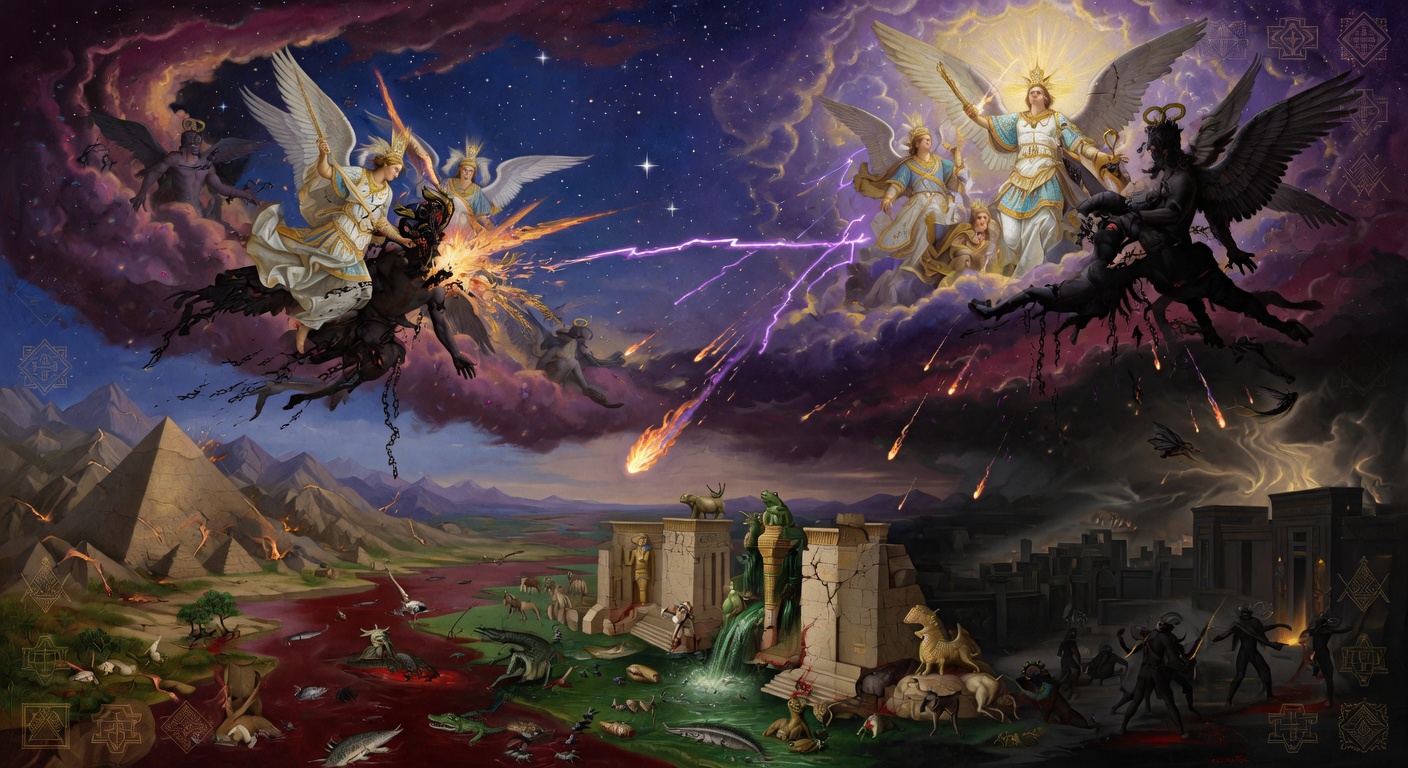
In the pseudepigraphal traditions surrounding the Exodus, the sequence of plagues functions less as isolated judgments and more as a structured campaign against the spiritual and political architecture of Egypt. The Book of Jubilees, particularly in chapter 48, frames these events within an ongoing struggle involving Mastema, the adversarial prince who empowers Pharaoh’s resistance. Here the successive afflictions—turning the Nile to blood, unleashing frogs and insects, striking livestock and human flesh—are presented as targeted reversals of Egyptian claims to divine protection, demonstrating that the gods of the land possess no independent authority once the Most High intervenes through his servants. The Book of Jasher supplies additional narrative texture, recounting how each plague directly undermined specific cultic centers and royal prerogatives. In chapters 79 and 80 the hailstorm is shown destroying crops sacred to agricultural deities, while the three-day darkness is depicted as extinguishing the ritual fires of Ra and extinguishing the authority of the magicians who had previously claimed parity with Moses. These expansions emphasize that the plagues operated simultaneously on physical and cosmic levels, eroding both the material wealth of Egypt and the perceived power of its pantheon. Although 1 Enoch itself does not recount the Exodus, its portrayal of the Watchers and their illicit transmission of heavenly knowledge provides the broader mythological backdrop against which later writers understood Egypt’s resistance. The same angelic rebellion that corrupted the earth before the flood is seen as continuing through the sorcerers and idols of Pharaoh’s court, making the plagues a further stage in the primordial conflict between the holy angels and the forces of corruption. Within this tradition the final plague against the firstborn therefore serves as the decisive blow, severing the line of transmission by which illicit power had been maintained. Taken together, these accounts present the plagues not merely as punitive measures but as deliberate warfare aimed at dismantling an entire system of rival sovereignty. Readers encounter a narrative in which natural elements become weapons, Egyptian religion is systematically exposed, and the supremacy of the divine order is reasserted through a carefully graduated series of assaults.
Details
- Era
- Exodus
- Category
- Exodus
- Participants
- God/Moses vs. Pharaoh and Egypt
- Outcome
- Israel delivered, Egypt humbled
- Divine Intervention
- Yes
Key Chapters
Key Passages
The Ten Plagues
The Book of Jubilees 48:1-19
 1nd in the sixth year of the third week of the forty-ninth jubilee thou didst depart and dwell (in the land of Midian, five weeks and one year. And thou didst return into Egypt in the second week in the second year in the fiftieth jubilee. And thou thyself knowest what He spake unto thee on Mount Sinai, and what prince Mastema desired to do with thee when thou wast returning into Egypt 3 . Did he not with all his power seek to slay thee and deliver the Egyptians out of thy hand when he saw that thou wast sent to execute judgment and vengeance on the Egyptians And I delivered thee out of his hand, and thou didst perform the signs and wonders which thou wast sent to perform in Egypt against Pharaoh, and against all his house, and against his servants and his people. And the Lord executed a great vengeance on them for Israel's sake, and smote them through (the plagues of) blood and frogs, lice and dog-flies, and malignant boils breaking forth in blains; and their cattle by death; and by hail-stones, thereby He destroyed everything that grew for them; and by locusts which devoured the residue which had been left by the hail, and by darkness; and (by the death) of the first-born of men and animals, and on all their idols the Lord took vengeance and burned them with fire And everything was sent through thy hand, that thou shouldst declare (these things) before they were done, and thou didst speak with the king of Egypt before all his servants and before his people
Did You Know?
The plagues systematically attacked the gods of Egypt (e.g., Nile god, sun god, etc.).