Throne of Glory
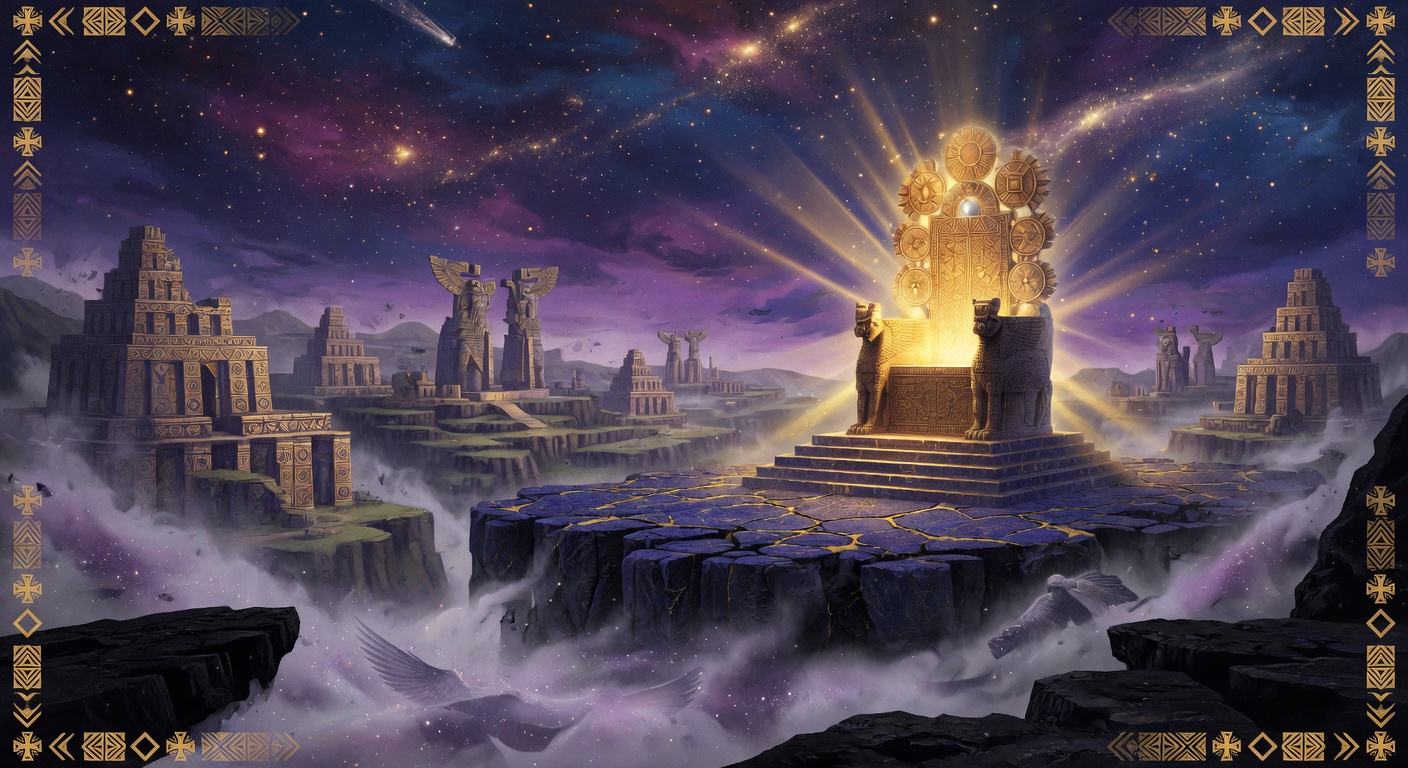
In the visionary accounts preserved within the Enochian corpus, the heavenly court emerges as the ultimate locus of divine authority, where cosmic order is maintained and eschatological judgment unfolds. Enoch's ascents reveal a structured celestial hierarchy in which a radiant throne serves as the focal point for the Lord of Spirits, surrounded by angelic hosts and the spirits of the righteous. This imagery underscores the texts' emphasis on transcendent sovereignty, distinguishing the eternal divine realm from the corruptible earth below and providing a framework for understanding the coming reversal of earthly injustice. Central to these descriptions is the association of the throne with the figure known as the Elect One or Son of Man, particularly in the Book of Parables. In 1 Enoch 62, the Lord of Spirits places this chosen figure upon the throne of glory to execute judgment over kings and the mighty, who tremble before his presence. Similarly, 1 Enoch 69:29 depicts the Son of Man seated there after the secrets of wisdom have been revealed, marking the consummation of divine rule. These passages draw on earlier throne visions such as those in 1 Enoch 14, yet they develop a distinctly messianic dimension, linking the throne's occupant to preexistent wisdom and future vindication of the faithful. Within the broader Enochian tradition, this celestial seat functions not merely as a static symbol of power but as the dynamic center from which righteousness is vindicated and the cosmos renewed. The throne's glory reflects the unapproachable holiness of the divine, while its accessibility to the visionary Enoch and the Son of Man highlights themes of mediation and revelation. Such motifs influenced later apocalyptic literature by offering a vivid portrayal of heavenly realities that affirm hope amid persecution, reminding readers that ultimate justice resides beyond the visible world.
Details
- Region
- Celestial
Journey Paths
Key Passages
Son of Man on the throne
The Book of Enoch 46:1-3
 1nd there I saw One, who had a head of days, And His head was white like wool, And with Him was another being whose countenance had the appearance of a man, And his face was full of graciousness, like one of the holy angels.
Did You Know?
The heavenly throne seen by Enoch where the Son of Man will judge.
The ultimate symbol of divine rule and justice in the Parables.